
Cleaners and Graders in Tanzania | Types, Uses & Buying Guide
Yaani Media
Discover cleaners and graders in Tanzania, including machine types, applications, crop compatibility, maintenance tips, and buying advice to help you choose the right post-harvest equipment
Cleaners and Graders in Tanzania | Types, Uses & Buying Guide
Discover all you need to know about cleaners and graders in Tanzania with this guide. Cleaners and graders are used to remove impurities and sort grain or seed into uniform categories. The machines are vital for Tanzanian farmers, cooperatives, milling operations, and seed and grain traders.
Before purchasing, it is important to know the capacities and specifications of cleaners and graders in Tanzania. For the machines to produce clean, sorted grains or seeds, crop compatibility is essential. Read on for a thorough breakdown of these machines to learn how they work and their importance in modern farming.
Shop online at Agricom for reliable post-harvesting solutions.
What are cleaners and graders?
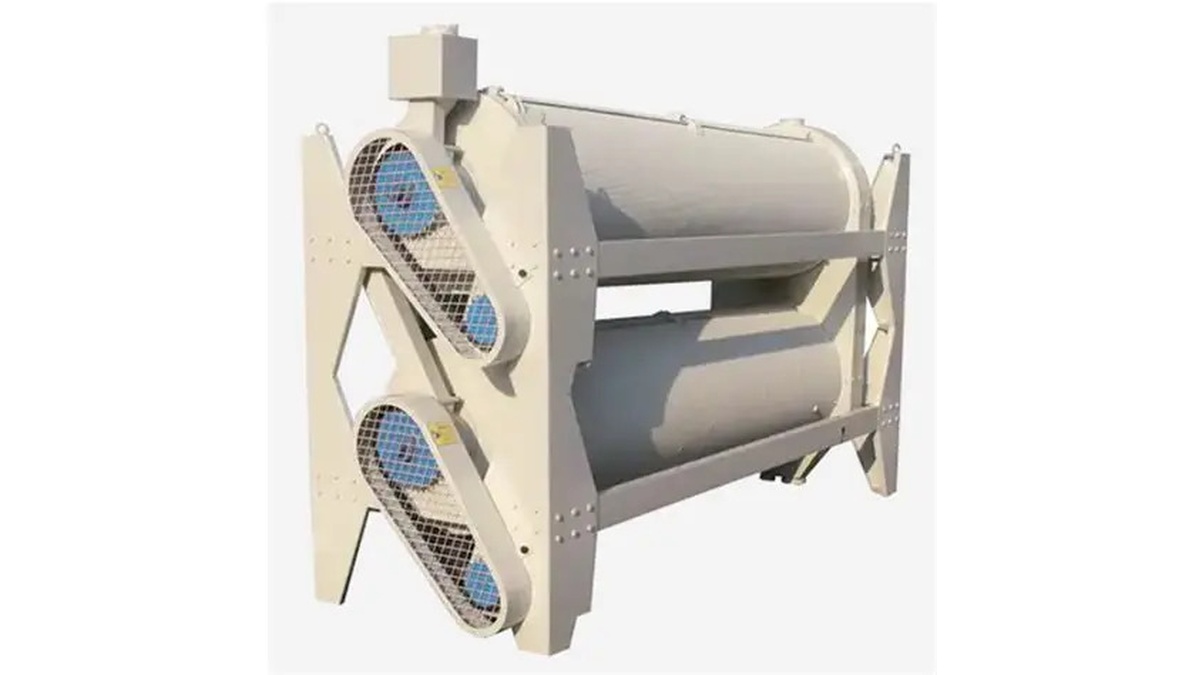
These are machines that process grain and seeds by removing unwanted materials and sorting them uniformly. Seed/grain cleaning equipment removes impurities such as stones, sticks, cobs, and debris. Grain/seed grading machines can sort the grains and seeds by size, weight or quality. Combined machines can clean and grade, while others perform separate functions.
ALSO READ: Post-harvest machinery in Tanzania: Complete guide to efficient crop processing
How do cleaners and graders work?
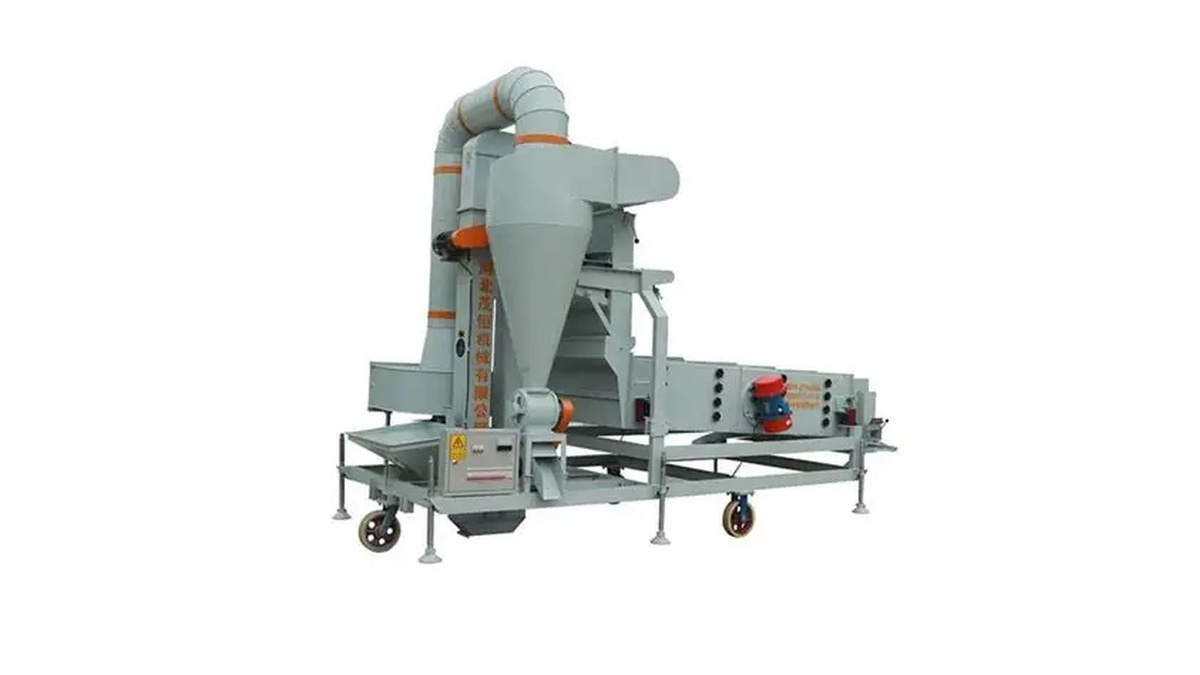
Grain and seed cleaners and graders work through the following process:
● Seeds or grains enter the machine through an inlet. This is called feeding or intake.
● A fan blows air into the falling grains or seeds. This is called aspiration. It removes light, unwanted materials.
● Clean heavy seeds continue because they cannot be lifted by air.
● The grains or seeds pass through vibrating screens or perforated metal plates with openings of different sizes. This is called screening.
● The top screen has larger openings to catch bigger unwanted materials such as sticks and cobs.
● The bottom screen has smaller openings that allow fine dirt, weed seeds, and other undersized material to fall through. This leaves the properly sized grain on top, to be collected. This is known as grading.
● Advanced machines may also include gravity tables or length separators.
Cleaning vs grading: what is the difference?
Below is the difference between grain/seed cleaning equipment and seed/grain grading machines.
Process | Main purpose | Typical output |
Cleaning | To remove unwanted materials from crops. Clean grains and seeds can then be stored or planted. | Cleaner grain or seeds, with better overall quality |
Grading | The uniform separation of clean grains or seeds by size, weight, or shape. | More uniformly graded grains or seeds for valuation. |
ALSO READ: Harvesting, Threshing, and Storage Equipment in Tanzania for Modern Farming Efficiency
Crops and impurities these machines can handle
Agricultural graders are compatible with various crops. However, their cleaning and grading specifications are not universal. Confirm the compatibility and specifications from Agricom. Below are common crops and impurities that cleaners and graders work for.
Crops
● They clean and separate maize, rice, wheat and other cereals by size and quality. This enables them to be stored safely or sold at higher prices.
● Beans and pulses are also cleaned and graded.
● Oilseeds such as sunflowers and sesame can be cleaned of impurities. The outputs depend on the machines’ specifications.
● Impurities in seed lots can be removed. The seeds can also be separated by size or weight, depending on the machine's capabilities.
Impurities
● Depending on specifications, cleaners and graders can remove dust, chaff, and light plant material by blowing them away.
● Oversized material, such as stones, and undersized materials such as dirt can be removed by cleaners and graders.
● Some cleaners and graders can separate broken grain pieces from good quality grain.
● Foreign seeds can also be removed, depending on the machine's capabilities.
Email us any queries about cleaners and graders.
Benefits of using cleaners and graders
● Using cleaners and graders can result in crops with more consistent quality, size and appearance.
● The machines process crops faster than manual cleaning or grading.
● Storing or planting clean, graded grains or seeds can support better results.
● The amount of unwanted material, such as dust, stones or sticks, handled during later processing is reduced.
● Clean, graded crops are better positioned to meet market standards.
● Using cleaners and graders may result in crops with higher market value.
Explore Agricom's services on our Facebook page.
Can one machine both clean and grade?
Yes, some cleaning and grading machines can perform both functions. This depends on the machine's model, separation capabilities, and operation. Confirm with Agricom whether seed/grain processing equipment can handle cleaning and grading.
Learn more about cleaners and graders from our social media pages.
How to choose the right cleaner and grader capacity
Decision factor | Question the buyer should answer |
Crop and end use | Is the machine intended for food grain, seed production, milling input, or commercial resale? This affects the outcome of cleaning or grading |
Throughput | How many kilograms or tonnes of grain or seed need to be processed per hour or per day? Confirm machine specifications with Agricom |
Impurity profile | What types of impurities or unwanted materials need to be removed, such as dust, chaff, stones, broken grain, mixed sizes, or light kernels? |
Cleaning standard | Is the goal pre-cleaning, fine cleaning, or grading into marketable quality classes? What do you expect from cleaning or grading? |
Power and site | What power source is available, and does the site have adequate floor space, ventilation, and an efficient material flow? |
Support | Are replacement screens, spare parts, maintenance services, and operator training or guidance readily available locally? |
Maintenance and safe operation
Refer to your equipment manual for specific maintenance instructions for your grading/grain cleaning machine. Here are general maintenance measures.
● After use, clean the screens, air passages, and any areas that have come into contact with crops.
● Periodically inspect the machine's components and moving parts according to the manual.
● Lubricate and service as specified by the manual. Use compatible components and oils.
● Store the machine properly. The area should be dry and covered to prevent rain.
● Before clearing blockages, follow the manufacturer’s safety precautions. This includes switching off the machine to reduce the risk of injury.
● The machine operators should be trained to use it properly.
● Secure the machine while in use or during storage.
Where to buy cleaners and graders in Tanzania
Agricom is a trusted provider of post-harvest machinery in Tanzania. You can confirm the availability of cleaners and graders from our website. Our experts will answer all your questions, including crop compatibility, model, throughput, price, warranty, commissioning, training, spare parts, and service support before purchase. Locate us here and contact us at +255 699 997 998 for more about our services.
FAQs about cleaners and graders
What is the difference between cleaning and grading?
Cleaning removes unwanted material from crops. Grading sorts grains and seeds by size, weight and quality.
What is the role of a grader?
A grader standardises grains or crops by size, shape, weight, quality, colour or length.
What are the common types of grain cleaners?
Common types of grain cleaners include air-screen cleaners, aspirators and gravity/density separators. Air-screen cleaners use air blasts and vibrating metal sheets to remove impurities. Aspirator cleaners use airflow to separate lighter material from heavier grain. Gravity separators use a combination of airflow and vibration to separate seeds and grains by density.
What is cleaning and grading of grains?
Cleaning and grading are post-harvesting processes. Cleaning refers to the removal of unwanted material from seeds or grains. Grading is the classification of seeds or grains by size, weight, or quality.
What cleaning methods are used?
The cleaning methods depend on the capabilities of the seed or grain cleaner. Screening, aspiration, scalping, de-stoning and density separation are some of the cleaning methods.
What is a grain grader?
It is a machine that separates grains or seeds by size, weight, colour, shape or quality.
Conclusion
The utility of cleaners and graders in Tanzania is undeniable. These post-harvesting machines optimise the removal of unwanted materials and sorting of grains and seeds. Get reliable post-harvesting solutions at Agricom.
Contact Agricom for all cleaner and grader queries, including current quotes.