
Best Knapsack Sprayer in Tanzania: Types, Prices & Buying Guide
Yaani Media
Explore knapsack sprayers in Tanzania, including manual, battery and motorized models. Learn prices, uses, benefits and maintenance tips before choosing the right sprayer for your farm.
Best Knapsack Sprayer in Tanzania: Types, Prices & Buying Guide
Looking for a knapsack sprayer in Tanzania? At Agricom, we offer high-quality, durable, and high-performance sprayers for weeds, pests, and insect control, as well as cleaning. They are designed for small-scale farming and large-scale farming.
A knapsack sprayer is an essential tool for farmers. The tool is commonly used where modern sprayers are unavailable, and farmers want to reduce operating costs. In this guide, we explore different types, uses, maintenance tips and why farmers choose Agricom as their reliable supplier.
Visit Agricom today to explore our different knapsack models and choose the one that fits your farm's needs.
What is a knapsack sprayer?
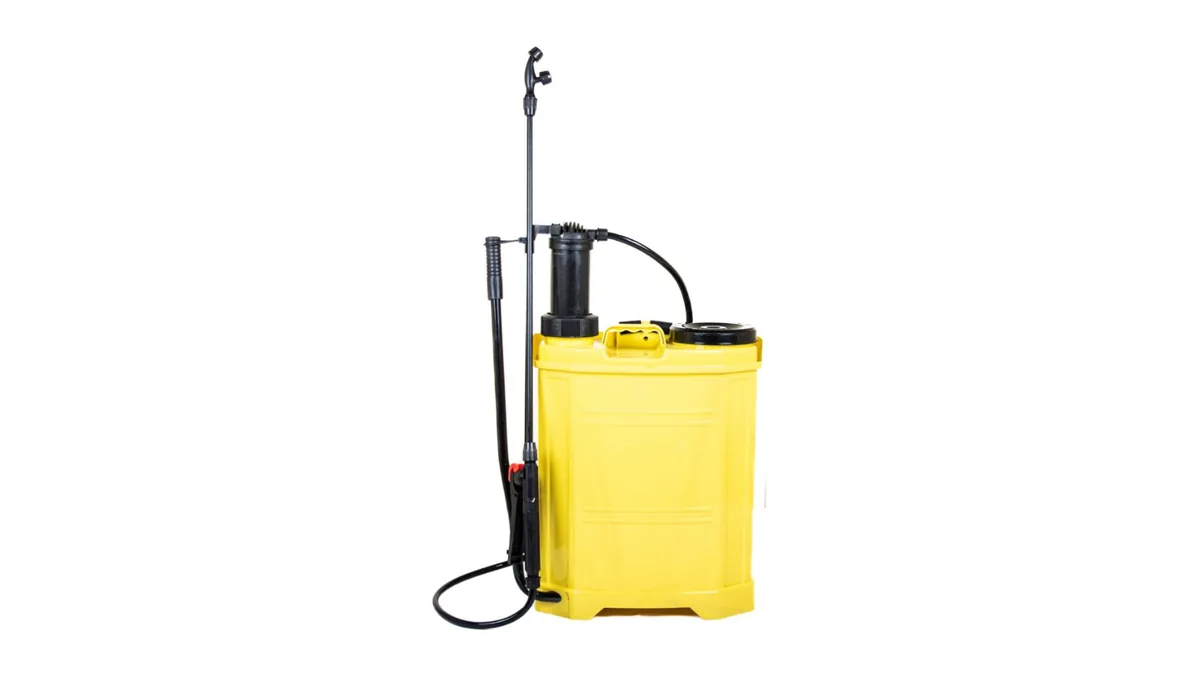
A knapsack sprayer is a portable, back-mounted tank specifically built for liquid application. It is used to spray chemicals such as fungicides, pesticides, herbicides, cleaning agents, and insecticides on gardens, in agriculture, or for sanitation. This model allows the operator to carry them on their back while using a hand-pump lever to generate spray pressure.
Types of knapsack sprayers
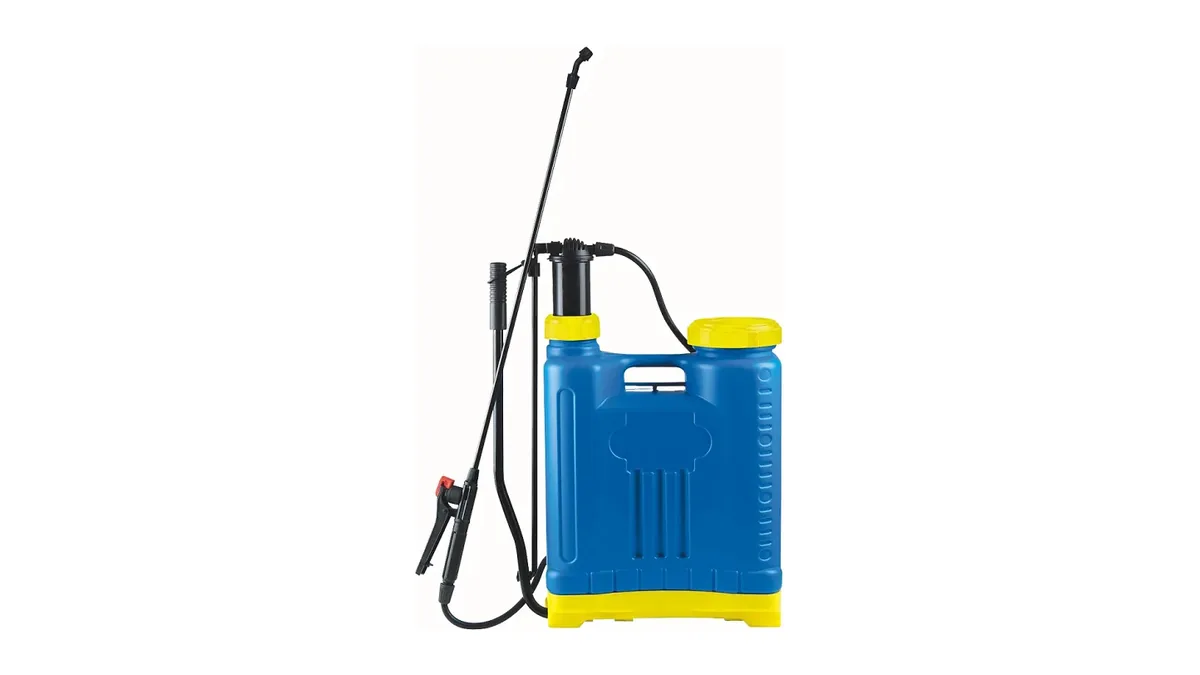
Knapsack sprayers in Tanzania come in different types depending on the farmer’s needs and farm size. Each type is designed for a specific application, standout features and user preference. Here are the common types:
Manual knapsack sprayers
A manual knapsack sprayer relies on the user’s effort, where you pump continuously to build pressure inside the tank. They come in piston-pump versions for high-pressure reach and diaphragm-pump versions that handle powdery or abrasive chemicals more reliably. A manual sprayer requires no power source and works well on medium-sized farms.
Battery (Rechargeable) knapsack sprayers
A battery knapsack sprayer in Tanzania is rechargeable, powered by lithium batteries. This means that the operator doesn’t necessarily need to pump manually while spraying. They are top quality when you need a perfect, consistent spray pattern, as they are quiet and light.
Motorized knapsack sprayers
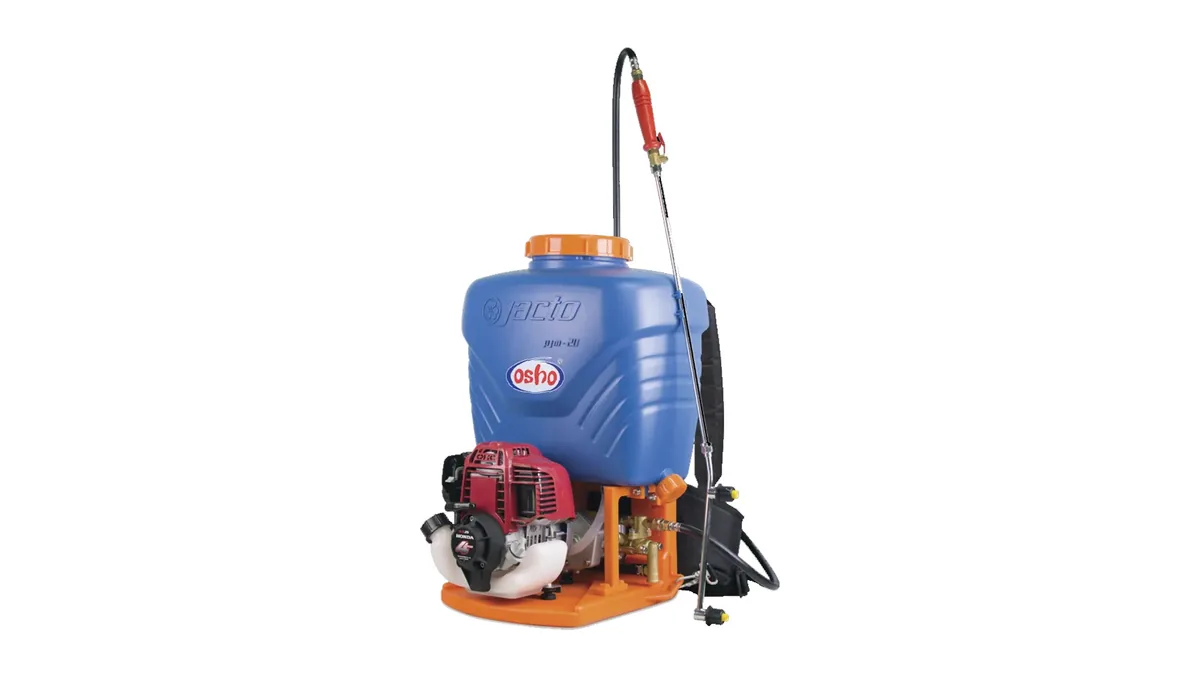
The motorized knapsack sprayer in Tanzania is powered by a petrol engine with a spark plug and a one-liter fuel tank containing a mix of petrol and light oil. The tank capacity ranges from 12 litres to 20 litres. They are suitable for large farms, spraying in a short time with less effort to operate. The trade-off is that they are heavier, noisier, and require fuel and more maintenance than the other types.
Key features of knapsack sprayers
Below are backpack sprayers' parts and their functions:
Tank
The tank is made of plastic, built to hold chemicals and is rust-resistant. It is used for storing water or for carrying a mixed water solution of herbicide, fungicide, and insecticide for spraying.
Filters
The sprayer has two filters: one near the tank cover and the other beside a narrow filter next to the trigger. They are used to prevent dirt or other substances from blocking the nozzle.
Spraying nozzles
The nozzle contains a plastic washer that prevents water pressure from entering the crops directly. This allows the water to be sprayed as a fine mist or light droplets, making it ideal for crop application.
Pump
The pressure pump creates hydraulic pressure to move liquid from the tank to the nozzle for spraying. It operates through mechanical action and is protected by a pressure relief valve that prevents excess pressure and helps avoid damage.
Pressure regulator
It is next to the pump and used to balance pressure in the knapsacks during spraying.
Valves
These include the cut-off valve and bypass valves. It is used to balance the flow of liquid from the pump and the flow from the pump to the tank.
Air chamber
An air chamber is a part of the sprayer that temporarily stores air to maintain stable nozzle pressure during operation.
Agitator
This is a tool used to stir the solution in the tank. It helps to thoroughly mix different types of materials in the tank, such as powders, fungicides, water paints, or other spray materials.
Pump handle
The pump handle is a long L-shaped fitting that pulls up and down to increase the pressure in the knapsack.
Strap buckles
This is where the belt is fixed to ensure the knapsack can be carried from one place to another.
Hose
The hose is a long, hollow tube that is used to transfer the solution from the tank to the nozzle for spraying.
Trigger
The trigger in a sprayer is used to discharge liquid from the tank to the nozzle, starting the spray.
Shop for reliable pesticide sprayers in Tanzania on our online store today.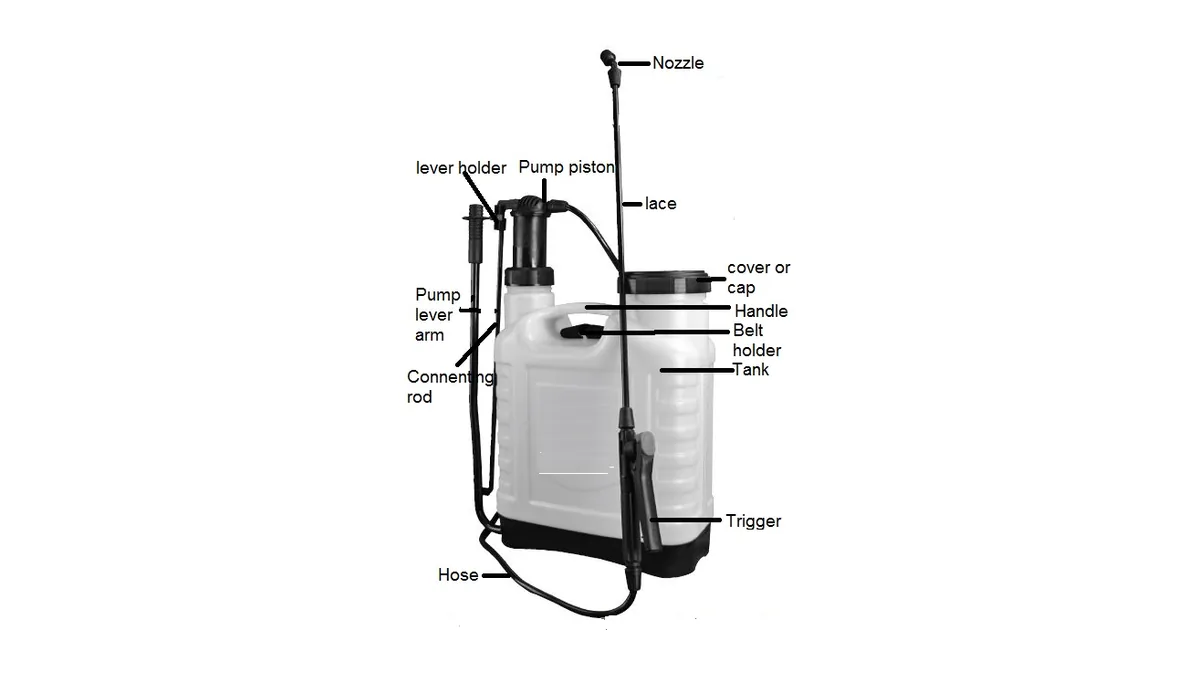
Applications of knapsack sprayers
The sprayer is a useful tool that helps farmers apply different liquids to crops and farms. The following are the uses of the sprayers:
Crop spraying
These sprayers help farmers apply pesticides and fungicides on crops to protect them from diseases and pests. The sprayer releases a fine mist that evenly covers leaves for better results.
Weed control
Farmers use a weed sprayer in Tanzania to spray herbicides directly on unwanted weeds on the farm. The sprayer allows targeted spraying, minimizing crop damage.
Pest control
Knapsack sprayers are also used to control insects such as aphids, grasshoppers and whiteflies.
Fertilizer application
The sprayer can also be used to spray liquid fertilizers mixed with water. It evenly distributes the solution across plants, improving absorption.
Farm sanitation
It is used to apply disinfectant in livestock houses and farm areas. This helps prevent the spread of diseases and keeps the environment clean. Farmers use it to maintain hygiene and protect both plants and animals.
How to operate a knapsack sprayer correctly
Below, we explain how to use a backpack sprayer in Tanzania step by step.
Step 1: Wear full protective clothing, including an apron, both gloves, and a face mask, before handling anything. These Personal Protective Equipment (PPEs) protect your skin, eyes and lungs from harmful exposure during mixing and spraying.
Step 2: Before loading any chemical, inspect the sprayer to ensure there aren’t any cracks or leaks by checking the tank, hose, and nozzle. You can adjust the straps on your shoulders to secure and position the sprayer comfortably on your back.
Step 3: Pour clean water into the tank until it is half full, then add the correct dose of the chemical you’re applying. Proceed to adding more water up to your desired level, then close the lid tightly.
Step 4: Shake the sprayer gently to mix the solution evenly throughout the tank. A uniform mixture ensures consistent chemical concentration as you spray.
Step 5: Calibrate the sprayer by setting it to low pressure and test-spraying clean water onto a surface to check the nozzle pattern. Hold the nozzle over a container for 30 seconds to measure your flow rate, then adjust the pressure up or down as needed.
Step 6: Hold the nozzle 30 to 50 centimetres away from your target crop or weed to ensure it’s positioned correctly. This distance delivers even coverage without wasting chemicals through excessive drift or runoff.
Step 7: Walk at a consistent pace as you spray each row. Slowing down or speeding up creates uneven coverage, leading to underdosing or chemical waste.
Step 8: Pump the handle smoothly and regularly to maintain constant pressure throughout the application. Dropping pressure mid-row changes your spray pattern and reduces effectiveness.
Step 9: Avoid wind and overhead spraying to prevent the chemical from drifting onto unintended areas, people, or water sources. Always direct the nozzle downward or forward and never spray above your head.
Step 10: Once spraying is complete, thoroughly clean the sprayer with detergent after use, then store it in a cool, dry place. Ensure to separate the nozzle and filter and clean them separately.
ALSO READ: Threshing equipment in Tanzania: Types, uses, prices, and best machines for modern farming
Maintenance tip of the knapsack sprayer
Maintaining farm sprayers in Tanzania is very important to ensure they can be used for a long time without spoiling. Here are maintenance tips that should be observed:
Use the sprayer specifically for the function it is made for.
Clean the sprayer to remove any trapped liquid from the tank, hose, and nozzle before you start, and wash off any chemicals once you finish so they don’t damage the sprayer.
The nozzles can fill with residue from the solutions being pumped through them. If you notice these, clean up with warm water and a soft-bristle brush.
Check your sprayer before and after use to ensure that it is in good condition. If any crack or leakage is spotted, it should be fixed before usage.
After using the sprayer, clean it and lubricate movable parts with light oil.
Store your sprayer in a well-ventilated area away from direct sunlight and corrosive chemicals.
Benefits of using knapsack sprayers
Backpack sprayer enhances efficiency by ensuring even chemical application, reducing input costs and labour. Here are the benefits of using these agricultural sprayers in Tanzania:
They are movable and easy to use, which benefits small and medium-sized farms. Farmers can easily access between the crops.
They are affordable compared to other sprayers.
They are multifunctional designs, so they can be used for different purposes.
Other versions are lightweight, enabling the farmer to carry them while spraying.
Why choose Agricom knapsack sprayers?
At Agricom, our sprayers are efficient, high-quality and affordable. They are designed for easy use on the farm, in the garden, or in areas with narrow spaces. Below are reasons why farmers choose us for the best knapsack sprayer in Tanzania:
Our sprayers are designed for easy movement, allowing farmers to carry them comfortably on their backs while spraying.
Our sprayers operate with high efficiency, helping farmers complete spraying faster while using fewer chemicals.
Agricom sprayers are designed for user comfort with adjustable straps, ergonomic handles, and controlled nozzles. This reduces fatigue and helps protect the user from excessive chemical exposure.
We build our sprayers with high-quality, durable materials that can withstand tough farm conditions and daily use. These are also easy to clean and maintain for long-term usage.
We offer different models, which include manual, battery, and motorized options. This allows farmers to choose the most suitable sprayer depending on their farm size and needs.
We offer after-sales services and equipment management.
ALSO READ: Crop protection equipment in Tanzania | Agricom
FAQs about knapsack sprayers
Which is the best knapsack sprayer?
Choosing the best knapsack sprayer depends on farm size, spraying needs and preferred power source. Manual, battery and motorised models each suit different applications.
What is the difference between a knapsack sprayer and a backpack sprayer?
Knapsack sprayers are manual, while backpack sprayers are powered by an engine.
How long does a knapsack sprayer last?
A knapsack sprayer can last 2 to 10 years, or even longer if the material used to make it is high-quality.
How to clean a knapsack sprayer?
You start by emptying the tank, rinsing it several times with clean water, and cleaning the hose, wand, and nozzle to remove any remaining
materials.
How much does a knapsack sprayer cost in Tanzania?
Knapsack sprayer prices in Tanzania vary depending on whether the model is manual, battery-powered or motorized. Capacity, brand, features and after-sales support also influence the final price.
Conclusion
A knapsack sprayer is an essential agricultural tool beneficial for small to medium-scale farmers. They are portable, affordable, and easy to use. When used properly and well-maintained, it maximizes its effectiveness.
Contact us today for expert guidance on maintaining your agricultural sprayers.
Phone: +25569 999 7998
Email: info@agricom.co.tz
Location: Plot 2319, Nyerere Road, Kamata, Opposite Mikumi Mall, Dar es Salaam, Tanzania