
Crop Sprayers Guide: Types, calibration, usage, and maintenance | Agricom
Yaani Media
Discover Agricom's complete guide to crop sprayers. Learn about the different types, proper calibration, safe usage, and maintenance to improve farming efficiency.
Crop Sprayers Guide: Types, calibration, usage, and maintenance | Agricom
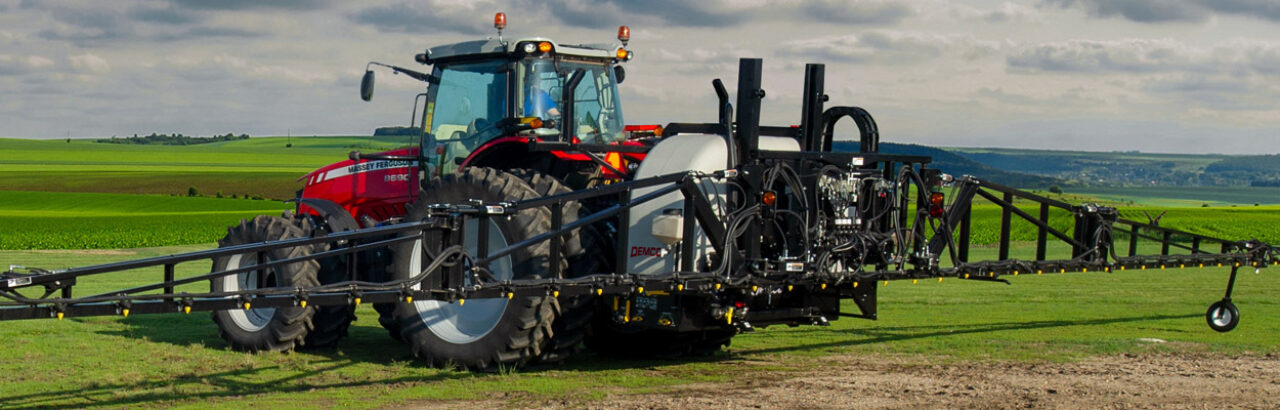
In agriculture, crop sprayers are a type of farm equipment that helps apply various liquid spray materials. This includes fungicides, pesticides, herbicides, and fertilizers on crops. This article explains different sprayer types, proper calibration, and easy maintenance practices for every farmer.
This simple guide shows you how to select, use, and maintain a crop sprayer to improve efficiency and reduce chemical waste. At Agricom, we help you choose the right sprayer based on your farm size. Learn how to calibrate your agricultural sprayer for accurate use and less waste below.
Visit Agricom today and check out our tractors and start farming smart.
What is a crop sprayer, and why does it matter for modern farming
Crop sprayer equipment helps farmers apply liquids such as fertilizers, pesticides, herbicides, fungicides, and water to crops in a controlled way. Farmers use crop sprayers to protect crops and support healthy growth. A good crop sprayer improves yields by ensuring even liquid coverage and correct application. It also reduces waste and lowers input costs, improving farm profits. This makes a crop sprayer an essential tool for modern and efficient farming.
Types of crop sprayers
Crop sprayers are essential tools in modern farming because they help farmers apply fertilizers, herbicides, and pesticides efficiently. Choosing the right type depends on your farm size, crop type, terrain, and budget, so it's important to understand each option. Here are the most common types of agricultural sprayers:
Knapsack sprayers
Knapsack sprayers are portable units carried on the back and operated manually or with simple pressure systems. Farmers use them for small farms, gardens, and spot spraying where accuracy is important. They are affordable, easy to maintain, and ideal for beginners.
Motorized and battery sprayers
Motorized and battery-powered sprayers use an engine or a rechargeable battery to generate pressure for spraying. They reduce manual effort and enable faster spraying than knapsack sprayers. Farmers prefer them for medium-sized farms where efficiency and time-saving are important.
Boom sprayers
Boom sprayers have a long horizontal bar with multiple nozzles that spray crops evenly. They are best suited for large, flat fields with row crops like maize or wheat. These sprayers help farmers cover large areas quickly with uniform results.
Tractor-mounted sprayers
Tractor-mounted sprayers attach directly to a tractor using a three-point hitch system. They are ideal for small to medium farms and are easy to control during operation. Farmers like them because they are cost-effective and convenient to use.
Mist blowers
Mist blowers use a powerful fan to blow fine spray droplets onto crops. They are mainly used in orchards, coffee farms, and vineyards where crops are tall or dense. These sprayers ensure the chemicals reach deep into leaves and hard-to-reach areas.
Trailed sprayers
Trailed sprayers are pulled behind a tractor and usually have larger tanks. They are suitable for medium to large farms that need to spray large areas without frequent refilling. These sprayers improve efficiency and reduce downtime.
Backpack sprayers
Backpack sprayers are similar to knapsack sprayers and are carried on the back for easy movement. They are ideal for small-scale farming, greenhouses, and targeted spraying. Farmers choose them because they are simple, portable, and low-cost.
Self-propelled sprayers
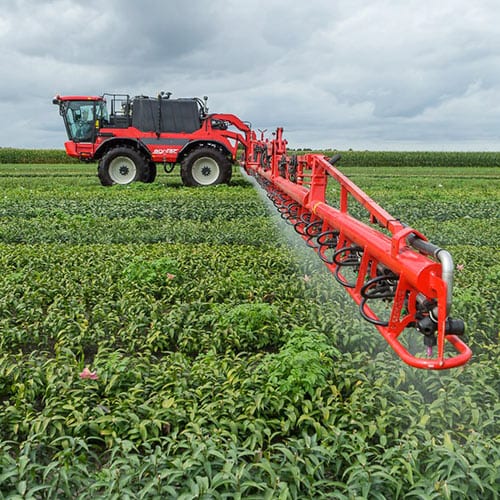
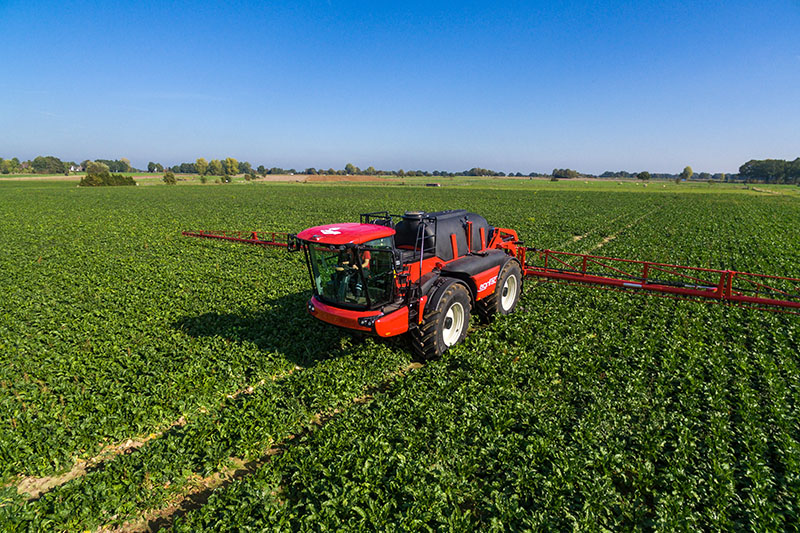
Self-propelled sprayers are large machines with their own engine and driving system. They are designed for large farms and can cover wide areas quickly and efficiently. Although expensive, they offer high precision and advanced spraying technology.
Drone sprayers
Drone sprayers use modern technology to spray crops from the air without physical contact. They are useful for large farms, difficult terrain, and areas that are hard to reach. Farmers use them to save time, reduce labor, and improve spraying accuracy.
Get comprehensive solutions to maximize productivity and efficiency in your farm at Agricom today!
Key components of a crop sprayer
A crop sprayer is made up of several essential parts. Here are the key components of a farm sprayer, with a simple guide on how each part works in agricultural spraying.
Tank
The tank holds the liquid mixture of water, pesticides, herbicides, or fertilizers before spraying. It is designed with a wide opening for easy filling and a drain outlet for quick cleaning after use. Many tanks also include internal baffles that reduce liquid movement, helping maintain stability during operation.
Pump
The pump moves the liquid from the tank to the spray system and creates the pressure needed for spraying. It is one of the most important parts because it controls how well the liquid is delivered to the crops. Different types of pumps, such as diaphragm, centrifugal, and roller pumps, are used depending on the sprayer size and farming needs.
Nozzles
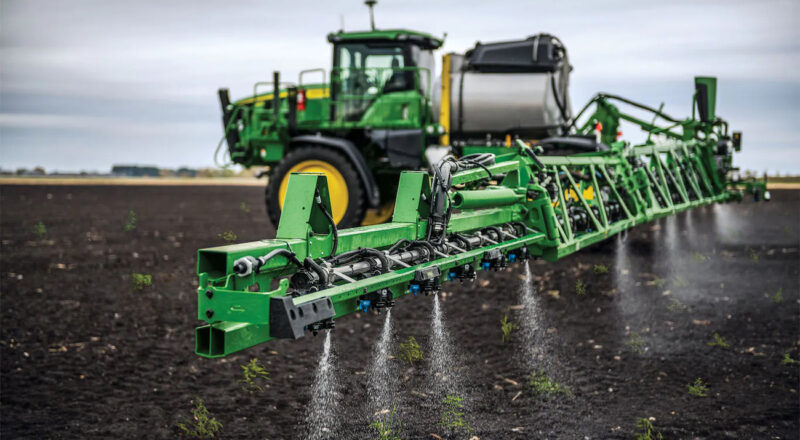
Nozzles control how the liquid is sprayed onto the crops by breaking it into small droplets. They determine the spray pattern, droplet size, and flow rate, which directly affect coverage and efficiency. Common types like flat fan and cone nozzles are chosen based on the type of chemical and crop.
Pressure regulator
The pressure regulator controls the amount of pressure used during spraying, while the gauge shows the current pressure level. This helps the operator maintain a steady and correct spray output across the entire field. Proper pressure control ensures even application and prevents chemical waste.
Filter system
The filtration system removes dirt and particles from the liquid before it reaches the pump and nozzles. It includes suction filters, line filters, and nozzle screens that protect the system from clogging. Clean filters help maintain smooth operation and extend the life of the sprayer.
Agitator
The agitator keeps the liquid mixture inside the tank well mixed during spraying. It prevents chemicals from settling at the bottom, which could lead to uneven application. This is especially important when using solutions that can separate over time.
Filtration system
The filtration system removes dirt and particles from the liquid before it reaches the pump and nozzles. It includes suction filters, line filters, and nozzle screens that protect the system from clogging. Clean filters help maintain smooth operation and extend the life of the sprayer.
How to choose the best crop sprayer for your needs
Choosing the best sprayer for farming depends on your farm size, crop type, and how often you spray. Small farms can use knapsack or battery-powered sprayers, while large farms need tractor-mounted or boom sprayers for better coverage and efficiency. Always check important features like tank capacity, pump pressure, nozzle type, and durability to ensure even spraying and less chemical waste. We guide farmers to select reliable sprayers that match their needs, improve productivity, and support long-term farm performance.
Crop sprayer calibration
We help farmers understand and use agricultural sprayers correctly to improve productivity. One important area we focus on is crop sprayer calibration, which ensures the sprayer applies the right amount of chemicals evenly in the field. Proper calibration helps reduce waste, save money, and protect crops from damage.
Guide on how to use a crop sprayer
Using sprayer equipment correctly helps improve spraying accuracy, protect crops, and reduce chemical waste. Proper use focuses on safety, correct mixing, and even application to ensure the best farming results. Below are the key steps every farmer should follow.
Preparation before spraying
Before using a crop sprayer, we recommend inspecting all parts of the equipment for leaks, blockages, or damage. Ensure nozzles are clean and the tank is free from old chemical residues. Always wear protective gear such as gloves, masks, and boots before starting work. This helps improve safety and ensures the sprayer works properly.
Mixing chemicals safely
Always read the product label before mixing any chemicals in the sprayer tank. Add clean water first, then measure and mix the chemical in the correct ratio as recommended. Stir or shake the tank gently to ensure the solution is well mixed. Proper mixing helps avoid crop damage and improves effectiveness.
Spraying techniques for even coverage
Hold the nozzle at a consistent height and maintain a steady walking speed while spraying. Keep pressure stable to ensure uniform distribution across the crop. Spray in a straight pattern with slight overlap to avoid missed areas. This ensures even coverage and better pest or weed control.
After-spraying procedures
After spraying, empty any remaining solution safely and rinse the tank thoroughly with clean water. Clean nozzles, filters, and hoses to prevent clogging and chemical buildup. Make sure you store the sprayer in a dry, shaded place away from direct sunlight. Proper maintenance extends the life of the equipment and keeps it ready for future use.
Crop sprayer maintenance tips
Keeping sprayers and farm tools in good condition increases their performance and long-term use. Proper maintenance improves spraying accuracy, protects crops, and reduces unexpected breakdowns. Below are some maintenance tips:
Daily checks
We advise farmers to inspect their sprayers before and after every use. Checking the tank, hoses, and nozzles for leaks, damage, or blockages. Cleaning all parts well to ensure smooth and even spraying. Testing the pressure to confirm the sprayer is working properly.
Weekly servicing
We recommend carrying out a detailed check at least once a week. Clean filters and nozzles to avoid clogging and uneven chemical application. Tighten any loose parts and replace worn components early. This helps maintain consistent performance and prevents costly repairs.
Storage practices
Proper storage after use should never be a point of compromise. Ensure you've emptied and rinsed the tank to remove chemical residues that can damage the system. Store the sprayer in a dry and shaded place to protect it from rust and sun damage. Good storage keeps your equipment ready and reliable for the next use.
Common crop sprayer problems and how to fix them
At Agricom, we help farmers identify and fix common problems that affect sprayers in agriculture. Small issues can reduce efficiency, waste chemicals, and affect crop health if not solved early. Here are the common things you should always watch out for:
Uneven spraying
Uneven spraying happens when some areas receive more chemicals than others. This problem often comes from incorrect nozzle height, worn-out nozzles, or inconsistent movement during spraying. This can be fixed by simply adjusting the nozzle position, replacing damaged parts, and maintaining a steady spraying speed.
Clogged nozzles
Clogged nozzles block the flow of liquid and cause poor or no spraying. Dirt, chemical residues, or debris usually cause this problem. You can easily fix this by washing the nozzles using clean water and a soft brush, and avoid using hard objects that can damage them. Regular cleaning helps prevent this issue.
Pressure loss
Pressure loss makes the sprayer weak and reduces its performance. It can result from leaks, worn seals, or blocked filters. To restore the proper pressure, check for loose connections, clean the filters, and replace damaged seals. Keeping the system well-maintained ensures consistent spraying results.
FAQs about crop sprayers
What are common sprayer problems?
The common sprayer problems include incorrect positioning of internal parts, such as gaskets, O-rings, and internal vanes, which can lead to leaks and poor spraying performance.
What are the four main sprayer components?
The four main sprayer components include the tank, pressure control valve, pump, nozzle, and spray gun.
What are the three main types of nozzles?
The three main types of nozzles are full-cone, hollow-cone, and fan.
What are crop sprayers called?
In other terms, crop sprayers are also called agricultural sprayers.
What are the two types of sprayers in agriculture?
The two types of sprayers are hand-operated and power-driven.
Conclusion
Choosing the right crop sprayer is key to achieving healthy crops and efficient farming results. At Agricom, we provide reliable equipment, expert support, and quality parts to help farmers spray with confidence. Our solutions improve performance, reduce downtime, and deliver consistent results in every season. By choosing the right crop sprayer, you choose durability, efficiency, and long-term value for your farm.
Contact us today for expert crop sprayer maintenance and support.
Phone: +25569 999 7998
Email: info@agricom.co.tz
Location: Plot 2319, Nyerere Road Kamata, Opposite Mikumi Mall Dar es Salaam, Tanzania