
Farm Implements in Tanzania: Types, Uses, Prices & Buying Guide
Yaani Media
Explore farm implements in Tanzania, including ploughs, harrows, cultivators, planters, sprayers and trailers. Learn uses, price factors and how to choose.
Farm Implements in Tanzania: Types, Uses, Prices & Buying Guide
Farm implements in Tanzania are attachments and tools used with tractors and other power units to carry out specific farm operations, from land preparation and planting to crop care and transport. Selecting the right equipment can make fieldwork more efficient and save time and effort.
Buying the right farm implements in Tanzania will depend on the intended use and the power rating and specifications of the tractor that will be used with them. The use of agricultural machinery helps farmers complete land preparation, planting and crop-management work more efficiently. In this guide, we discuss the equipment used to work on the land, common types of implements, price factors, tractor compatibility and what to consider before buying.
What are farm implements?
Farm implements in Tanzania are commonly mounted or trailed behind tractors using a three-point hitch or drawbar. PTO-driven implements use the tractor’s power take-off shaft, while some equipment also depends on the tractor’s hydraulic system. Implements are different from self-propelled machines because an implement normally relies on another power unit to pull, carry or drive it. Common categories include tillage and land preparation, planting, crop production and protection, material handling and transportation.
For the wider machinery picture, see Agricom’s Agricultural Machinery in Tanzania guide, which covers tractors, power tillers, harvesters and other machinery beyond implements.
Types of farm implements used in Tanzania
When selecting implements to buy for a particular piece of farmland in Tanzania, it is necessary to understand what equipment is needed for the job and whether it is compatible with the tractor or power unit. Below are some of the common types of agricultural equipment used for different operations.
Farm implement | Main use |
Disc plough | Primary soil preparation |
Mouldboard plough | Turning and preparing soil |
Disc harrow | Secondary soil preparation |
Cultivator | Soil cultivation and weed control |
Ridger | Creating planting ridges |
Planter | Mechanised seed placement |
Seed drill | Consistent seed placement |
Boom sprayer | Crop protection |
Fertilizer spreader | Fertilizer application |
Trailer | Farm and produce transportation |
Agricultural loader | Material handling |
Bed maker | Preparing raised beds |
For more detail on primary tillage, read Agricom’s 3-disc plough in Tanzania guide. For a broader view of ploughs, harrows, cultivators and levelling equipment, use the land preparation equipment guide.
Farm implements for different farming operations
Different farm machinery in Tanzania works best when it is matched to the work it is expected to do. The right implement also needs to match the tractor, crop, soil and field conditions.
Farm implements for land preparation
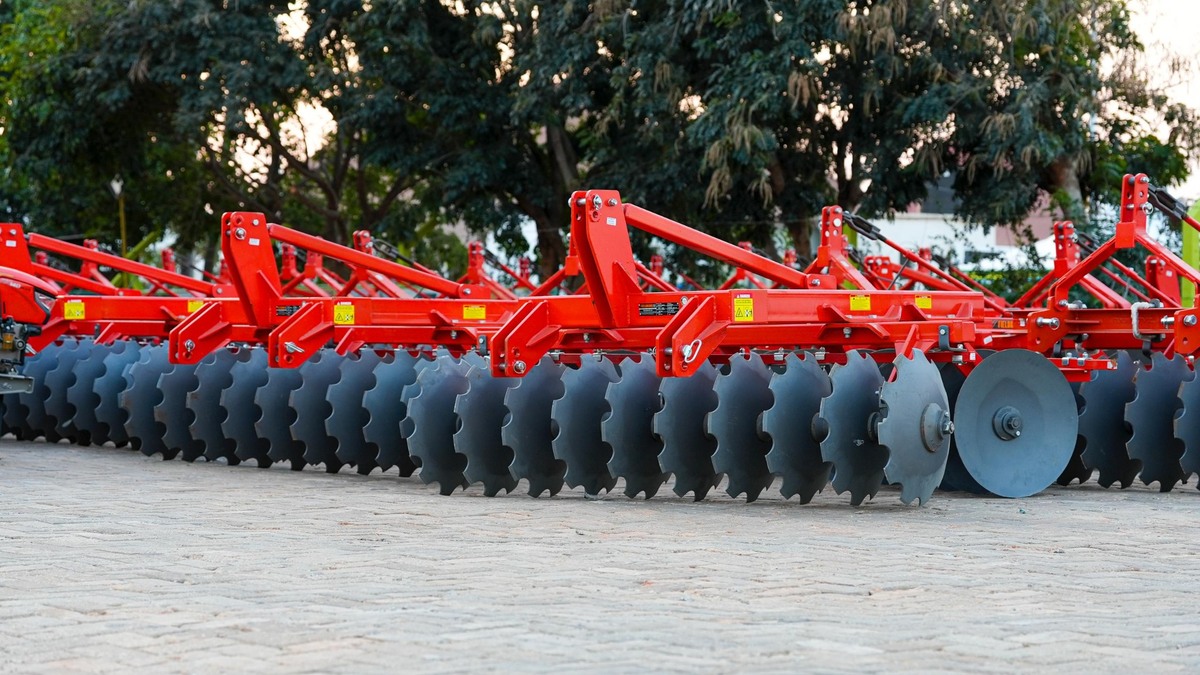
Proper soil preparation has a significant effect on planting conditions. Primary tillage implements like the disc plough in Tanzania cut and turn soil before planting when the implement is matched correctly to the tractor and field conditions. Attachments for secondary tillage operations, such as the disc harrow in Tanzania or cultivator, break clods and help prepare a finer seedbed. Ridgers create planting ridges or rows where the production system requires them.
Farm implements for planting
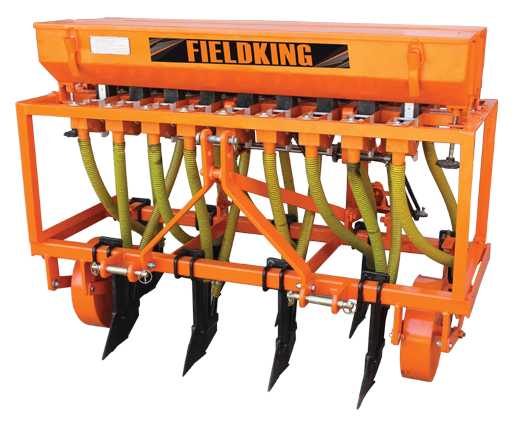
Precision seeding requires specific farm machinery such as planters and seed drills that place seed at a selected depth and spacing. The right option depends on the crop, seed size, row spacing and planting system. Before buying, confirm the planter or drill’s working width, linkage, seed-metering system and tractor requirements.
Farm implements for crop management
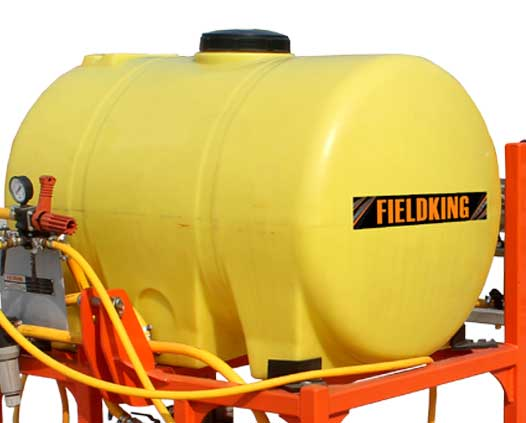
Boom sprayers mounted on a compatible tractor can cover wider field areas and help apply crop-protection products more uniformly when correctly calibrated. Always follow the product label and equipment manual when mixing or applying crop-protection products.
Fertilizer spreaders help distribute fertilizer at a selected application rate. The correct spreader depends on the fertilizer form, required working width, farm size and tractor setup. Agricom’s fertilizer applicator guide explains the main applicator types and their uses.
Farm implements for harvesting and transportation
Farm trailers fitted behind a compatible tractor make it easier to move produce, seed, fertilizer, tools and other materials between fields, storage areas and processing points. The trailer payload, hitch type, braking arrangement and tractor capacity should be checked before use.
How to choose the right farm implement in Tanzania
Instead of focusing only on the initial cost of farm implements, consider how the equipment will work on your farm and with your tractor before purchasing new farming equipment.
Farm size and workload
Choose the working width and capacity of the implement to fit the area you need to cover and the time available for the operation.
Crop compatibility
The right farm equipment in Tanzania should match the crops and operations on the farm. Planting, cultivation, spraying and harvesting all require different equipment.
Soil type and field conditions
Heavy, compacted or residue-covered soils can require stronger tillage equipment and more tractor traction than lighter soils. Terrain, stones, moisture and field access also affect implement choice.
Tractor horsepower and lift capacity
Check the implement manufacturer’s recommended tractor power, hitch category, lift capacity and operating weight. A tractor must have enough capacity to pull, lift and operate the implement safely.
Working width
Ensure the implement’s working width and weight match the tractor and workload. A wider implement can increase field capacity, but it can also require more power, traction and lifting capacity.
Maintenance, service and spare parts
Choose equipment with accessible service support and replacement parts. Agricom provides farm machinery, technical support and access to spare parts through its product and service network.
Browse the Agricom Online Store to compare current equipment categories and available products.
Tractor and farm implement compatibility
Before purchasing a new tractor or farming implement, ensure that both machines are compatible with each other. Some of the factors that play a role in tractor-drawn implement compatibility include:
Three-point hitch category
Match the implement’s hitch category and mounting arrangement to the tractor. Also check the tractor’s lift capacity against the implement weight.
Horsepower
Use the implement manufacturer’s recommended tractor horsepower as a starting point, then consider soil, slope, traction, working depth and field conditions.
PTO output and RPM
PTO-driven equipment must match the tractor’s PTO speed and power requirements. Never assume that a PTO implement is compatible based on hitch size alone.
Hydraulic system
Hydraulic implements need the correct number of auxiliary valves, pressure and flow for the functions they operate.
If you are deciding between different power units, Agricom’s Power Tiller vs Tractor in Tanzania guide explains how the two options differ in size, power and suitable farm work.
What affects farm implement prices in Tanzania?
Farm implement prices in Tanzania vary according to the type of implement, size, working width, capacity, brand, model, materials, tractor requirements and the support package included with the purchase. Transport, exchange rates, availability and optional attachments can also affect the final quotation.
A disc plough, planter, sprayer and trailer are very different machines, so one general price cannot represent the whole category. Compare the exact specifications and what is included in the quote, then confirm delivery, warranty, spare parts and after-sales support before buying.
For a current quotation, contact Agricom with your tractor model, horsepower, crop, farm size and the operation you want to mechanise.
Farm implement purchase advantages
Farm machinery like a corn planter or disc harrow can offer several practical advantages when the implement is chosen correctly for the farm and operated according to the manufacturer’s instructions.
Faster and more efficient farming operations
Tillage, planting, spraying and transport operations can be completed faster than relying only on manual labour.
More consistency during planting
Planters and seed drills can improve consistency in seed depth and spacing when they are correctly set up and calibrated.
Less manual labour
Farm machinery in Tanzania can reduce dependency on repetitive manual work for operations that are suitable for mechanisation.
Better use of tractor power
Appropriate implements allow the tractor’s available engine, PTO and hydraulic power to be used for specific field operations. Implements do not increase tractor power; they help put that power to work.
Increased farming capacity
The right implements can help a farmer cover more land or complete time-sensitive operations more quickly without depending on a separate self-propelled machine for every task.
Should you buy or hire farm implements?
Depending on the intended use, financial considerations and the scale of farming, decide whether to purchase or hire farm equipment for your Tanzania enterprise. Consider the following differences:
Buy | Hire |
Higher initial investment | Lower upfront commitment |
Available when needed | Depends on service availability |
Farmer owns equipment | No ownership |
Maintenance responsibility | Often handled by service provider |
Suitable for frequent use | Useful for occasional or seasonal needs |
As a farmer, consider farm size, frequency of use, available capital, seasonal timing and local access to machinery services before deciding whether to buy or hire.
Why buy farm implements from Agricom?
At Agricom, we help farmers compare machinery and implements suited to their farming operations. Our equipment range is supported by product guidance, technical support, spare-parts access and after-sales service.
Range of implements
Agricom provides equipment for land preparation, planting, crop care, material handling and transport, alongside tractors and other farm machinery.
Technical compatibility advice
Our team can help compare tractor horsepower, working width, linkage, PTO and hydraulic requirements before you choose an implement.
Spare parts
Access to genuine spare parts and service support can reduce downtime and make long-term equipment ownership easier to manage.
Technical support
Agricom provides product and technical support for customers. Service availability and exact support terms should be confirmed for the specific machine and location.
Not sure which implement is right for your farm? Talk to Agricom’s team about your tractor, crops, field conditions and farming requirements.
How to maintain your farm implements for long-term use
Farm implement maintenance is essential for reducing avoidable breakdowns and keeping equipment ready during busy planting and harvesting periods. Always follow the manufacturer’s operator manual and maintenance schedule for the exact implement.
• Clean discs, tines, planter seed boxes and other exposed parts after use so soil, crop residue and moisture do not remain trapped on the equipment.
• Lubricate grease points, PTO shafts, bearings and moving joints according to the manufacturer’s recommended intervals.
• Inspect wearing parts such as plough discs, cultivator points and harrow discs, and replace them when wear affects performance.
• Check nuts, bolts, pins, guards and hydraulic hoses for looseness, leaks, cracks or damage before operation.
• Store equipment in a dry, secure place where practical and protect exposed metal surfaces from corrosion.
• Touch up damaged protective coatings where appropriate, while keeping paint and coatings away from surfaces where the manufacturer does not recommend them.
Agricom provides technical support and spare-parts access for farm machinery. Contact the team to confirm service options for your equipment and location.
FAQs about farm implements in Tanzania
What are farm implements?
Farm implements are tools or attachments that are mounted on, trailed behind or powered by a tractor or other power unit to perform specific jobs such as tillage, planting, spraying and transport.
What are the common farm implements used in Tanzania?
Common farm implements include disc ploughs, disc harrows, cultivators, ridgers, planters, seed drills, boom sprayers, fertilizer spreaders and trailers.
What implement is used for primary tillage?
Disc ploughs and mouldboard ploughs are examples of primary tillage implements. The right option depends on soil conditions, tractor power, working depth and the farming system.
How do I choose the right implement?
Choose implements that match the job and are compatible with your tractor’s horsepower, hitch, lift capacity, PTO, hydraulics and operating conditions.
How much do farm implements cost in Tanzania?
Prices vary by implement type, brand, size, working width, capacity, specifications, delivery and support. Ask for a current quotation for the exact model and configuration you need.
Where can I buy farm implements in Tanzania?
Agricom supplies farm machinery and implements in Tanzania through its product and service network. Browse the online store or contact the team to confirm current availability, specifications and quotation.
Conclusion
Farm implements in Tanzania can help farmers make better use of tractors and mechanise specific operations such as land preparation, planting, crop care and transport. The right choice depends on the job, tractor compatibility, farm conditions, working capacity, maintenance needs and long-term support.
Whether you need implements for land preparation or another stage of the farming cycle, compare the specifications carefully before buying. Explore Agricom’s current farm equipment or contact our team for help choosing equipment that matches your tractor and farming requirements.