
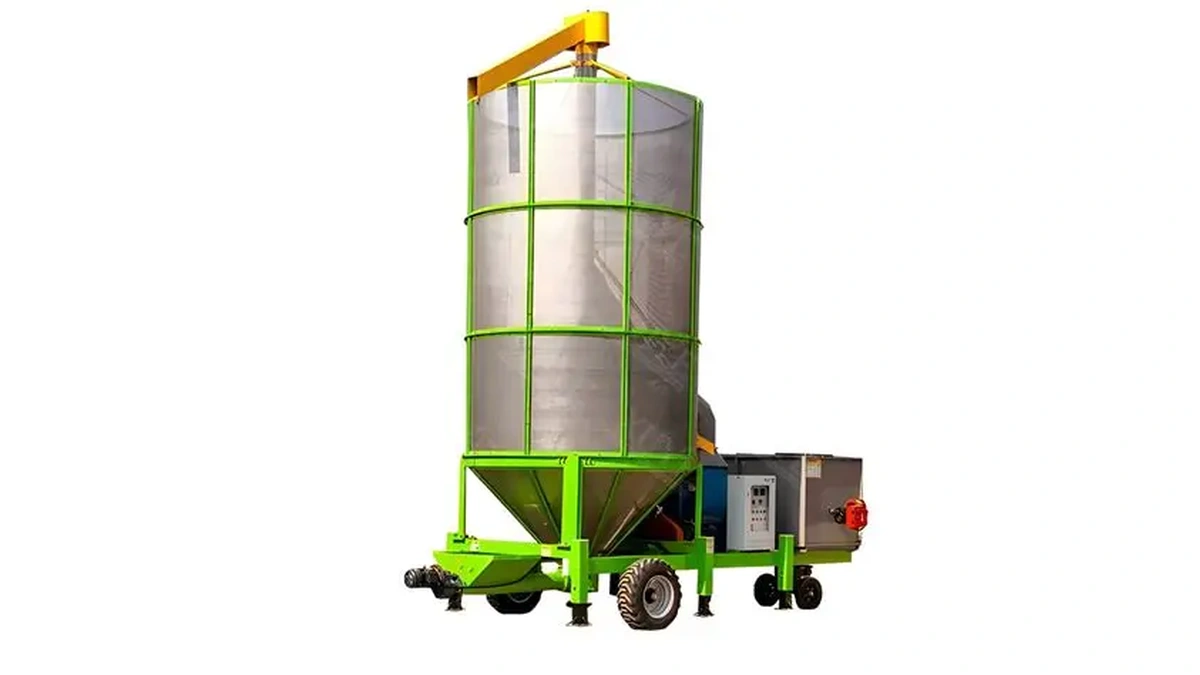
Grain Dryers in Tanzania | Types, Uses & Buying Guide
Yaani Media
Discover grain dryers in Tanzania, including machine types, key components, benefits, drying methods and buying guidance to help farmers reduce post-harvest losses.
Grain Dryers in Tanzania | Types, Uses & Buying Guide
The post-harvesting process is critical and requires grain dryers to prepare cereals for safe storage. The entire procedure ensures grains are free from mold, insect damage, and spoilage, protecting grain quality. To succeed in this exercise, farmers use machinery that continuously flows hot air to remove moisture from the grain.
This guide defines grain dryers and the various types available from Agricom. It also covers how they work and the benefits they have to farmers. The sections below also give a brief comparison of the various methods of grain drying and why Agricom is the best place to get quality farm machinery.
Looking for a reliable grain dryer in Tanzania? Contact Agricom today for expert advice and find the ideal grain drying solution for your farm.
What is a grain dryer?
A grain dryer is farm machinery used to lower the moisture content of farm produce. To make their tasks a success, dryers use heated air and fans to remove moisture. The main aim of drying is to prevent the grains from molding, rotting, or spoiling during storage. Crops that rely on drying to maintain their quality include corn, rice, wheat, beans, and cowpeas, among other grains.
Read Also: Agricultural Machinery in Dar es Salaam: Modern Equipment for Smarter Farming
Key components of grain dryers
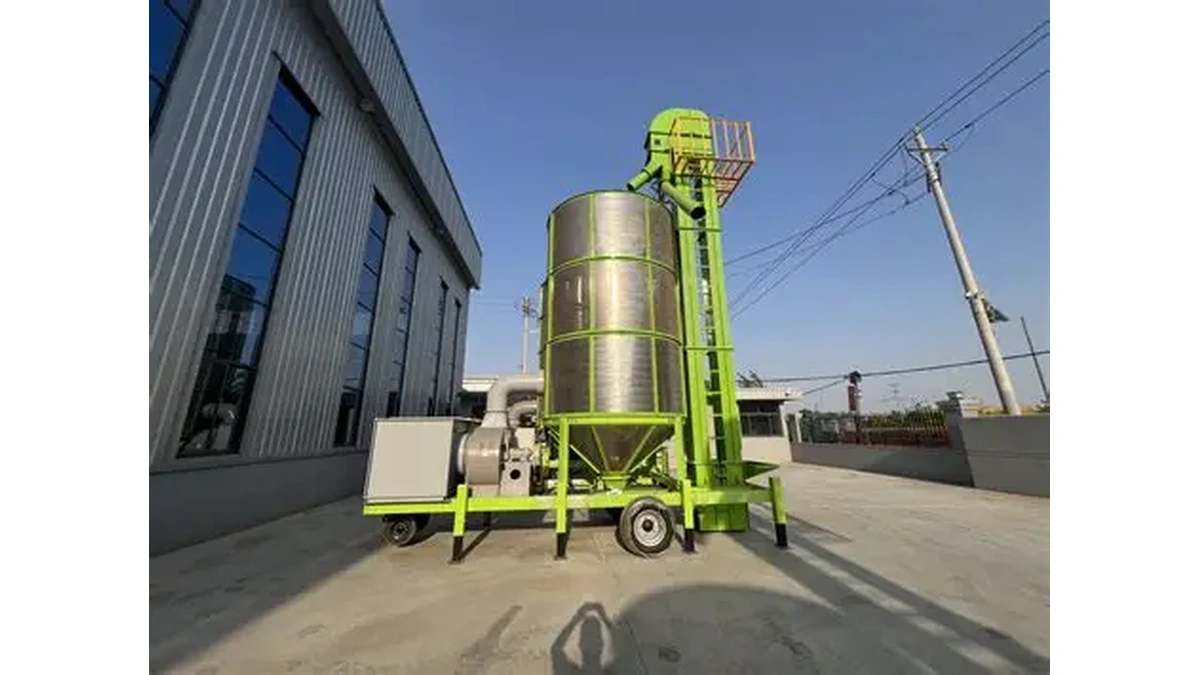
Knowing the various parts of the post-harvest drying machinery is very important. Below are the key components of grain dryers.
Component | Function |
Drying Chamber / Column / Bin | Holds the wet grain while hot air flows through it to remove moisture. |
Burner / Heat Source | Produces hot air using diesel, gas, or electricity for grain drying. |
Fan / Airflow System | Pushes and circulates hot air evenly through the grain for faster drying. |
Plenum Chamber | Distributes pressurized hot air evenly before it enters the grain bed. |
Discharge / Unloading Mechanism | Removes the dried grain from the dryer using augers, conveyors, or discharge gates. |
Control Panel & Sensors | Monitors and controls temperature, moisture, and drying time to ensure safe and efficient drying. |
Types of grain dryers
Batch grain dryers
Batch grain dryers are a group of moisture removal machines that dry only a fixed volume of grain in separate, individual cycles. The dryers include static grain dryers, mixing (circulating) batch dryers, and portable batch dryers. This type is mainly used on small and medium farms, and it is cheap and easy to use.
Continuous flow grain dryers
The continuous flow grain dryers work non-stop by letting wet grains enter at the top and dry exit from the bottom. The major types here include cross-flow and mixed-flow systems. Characterized by automatic discharge and integrated cooling, these dryers are fast and work with massive capacities, making them a great solution for commercial farming operations.
Portable grain dryers
These grain drying equipment types are mobile and are commonly mounted on trailers. Basically, they are used to lower the crop's moisture. The primary types include batch portable dryers, continuous flow portable dryers, and recirculating column dryers. Since they can handle between 1,000 and 4,000 bushels per hour, they can comfortably be used by both large- and small-scale farmers.
Stationary grain dryers
The stationary grain dryers, as the name suggests, are permanent, high-capacity systems designed for large-scale farmers and other commercial operations. These dryers are categorized into tower dryers, mixed-flow dryers, and continuous-flow column dryers. Basically, they can handle between 10 and 150 tonnes per hour depending on the column width.
Visit our Agricom online store for quality grainers.
How does a grain dryer work?
The various grain dryer types work using either thermal or electrical power. Thermal machines use propane, natural gas, biogas, diesel, or wood to produce heat for drying. On the other hand, the electrically driven ones use single-phase, three-phase, or a phase converter to run mechanical components like fans and augers. Below is a step-by-step procedure on how grain drying machines work.
Loading
This is literally the first step in grain drying. Here, wet grains enter the top of the machine, mainly from a truck, bin, or conveyor. At this point, the operators are keen on the numbers to avoid overloading the chamber. This strict operation helps maintain proper airflow paths, which are vital for moisture evaporation.
Heating and evaporation
Here, the wet grains are exposed to heat and fans to evaporate water. Normally, burners heat the air, and fans push that hot air through the moving grains. For efficiency, heat forces water inside the kernels to move to the surface where the moving air absorbs it and discharges it outside.
Cooling
At this point, the grains are dry and being prepared for discharge. The machines use ambient airflow, temperature matching, and kernel hardening to ensure the heated grains are effectively cooled. This cooling phase is important since it helps prevent condensation, stop pest activity, and stabilize the grains for long-term storage.
Discharge
The last step in drying, where the grains are being moved from the machine. The outlets are normally positioned at the bottom of the machines. At this point, the grains are fully dry and cooled, ready for storage.
Read Also: Fertilizer applicators in Tanzania: Types, uses and benefits | Agricom
Benefits of investing in a grain dryer
Getting a grain dryer is a strategic investment for the farmer since it has many advantages. Here are the key benefits of purchasing a dryer as a farmer.
Resists mold and pests: Reducing moisture helps prevent mold, bacteria, insects, and other pests from harming stored grain.
Preserves grain quality: Controlled drying preserves the appearance, nutritional value, and overall quality of the grain, making it more appealing to the grain buyer.
Defends against the weather: Farmers can dry crops in the interior without risking spoilage due to bad weather, humidity, or unexpected conditions.
Ensures farmers save time: Grain dryers reduce drying time from several days to just a few hours, allowing farmers to complete harvesting more quickly.
Better storage and marketing: safely stored grain will last longer, and farmers will have time to sell at more favorable market prices.
Read Also: Post-harvest machinery in Tanzania: Complete guide to efficient crop processing.
Grain dryers vs traditional sun drying.
Despite both grain dryers and sun drying aiming at the same goal of reducing grain moisture content, they still have great variations. The differences mainly depend on how they work and their efficiency. The table below compares grain dryers and sun drying.
Feature | Grain Dryer | Traditional Sun Drying |
Drying Time | Dries grain in a few hours. | It takes several days, depending on the weather. |
Weather Dependence | Works in any weather. | Depends on sunny and dry conditions. |
Moisture Control | Dries grain to a consistent moisture level. | Moisture levels are often uneven. |
Grain Quality | Preserves grain colour, quality, and nutritional value. | Grain quality may decline due to uneven drying. |
Risk of Mold | Low risk because grain dries quickly. | Higher risk if drying is delayed by rain or humidity. |
Pest Protection | Grain is protected from birds, insects, and rodents. | Grain is exposed to pests during drying. |
Labour Required | Requires less manual labour. | Requires frequent turning and close monitoring. |
Drying Capacity | Can dry large volumes at once. | Limited by available drying space. |
Harvest Speed | Speeds up harvesting by reducing drying time. | Slows harvesting because drying takes longer. |
Post-Harvest Losses | Minimizes grain losses from spoilage and handling. | Higher losses due to weather, pests, and contamination. |
Operating Cost | Higher initial investment and fuel or electricity costs. | Lower equipment cost but higher labour costs. |
Best Use | Commercial farms and large harvests require fast, reliable drying. | Small farms with limited budgets and favourable weather. |
FAQs about grain dryers
What moisture level is safe for storing maize?
The safe moisture level for storing maize is 13% to 14% for short-term storage, and 13% and below for long-term storage.
Which grain dryer is best for small farms?
The best dryers for small farms are small-batch dryers, portable mobile dryers, and in-bin drying systems.
Can one dryer handle multiple crops?
Yes. One dryer can handle several crops, provided you adjust the settings and properly clean the equipment between different grain types.
What fuel options are available?
The available fuel options are petrol (gasoline), diesel, and alternative options like electricity and biofuels.
How much grain can be dried per hour?
Grain dryers can process anywhere from a few tons up to 100 metric tons per hour, depending on the machine size.
Conclusion
Grain dryers are an investment that is vital for farmers concerned about preserving crop quality, minimizing post-harvest losses, and increasing profitability. The right grain dryer will help improve grain quality, ensure safe storage, and dry grain more quickly year-round. Agricom has a proven track record of providing dependable drying solutions to farms of any size, with its technical team standing ready to support you in maximizing each harvest.
Visit Agricom and get detailed information about the perfect grain dryer for your farm.