
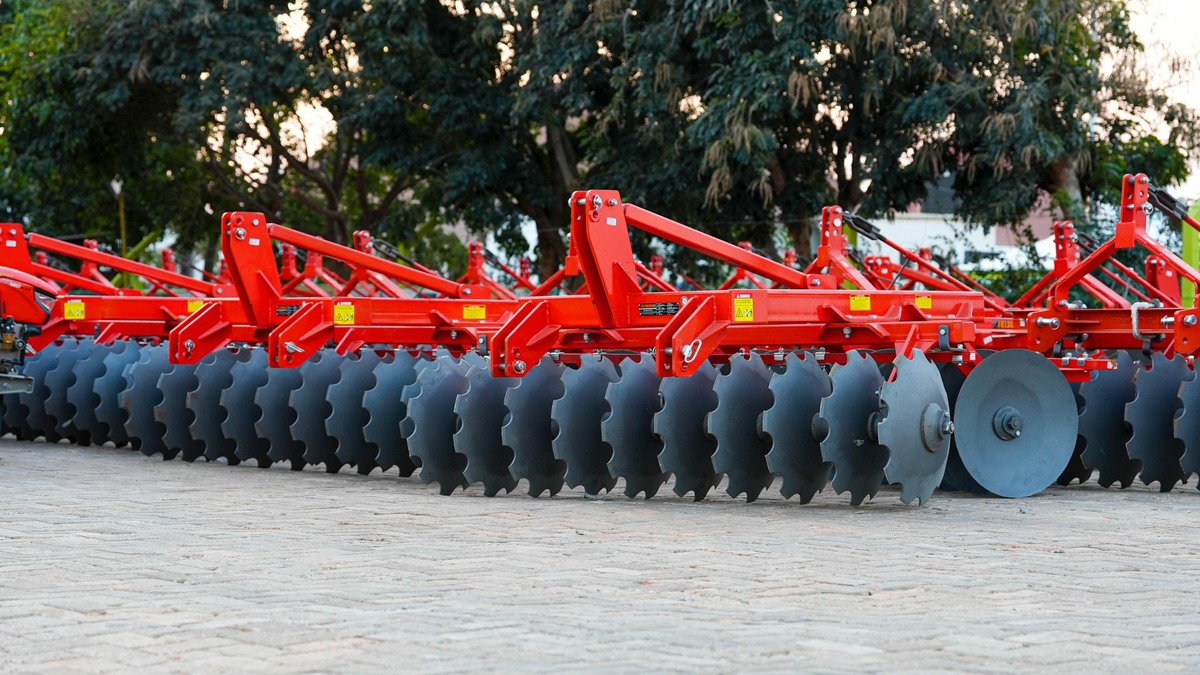
Medium Farm Equipment in Tanzania: Types, Uses & Buying Guide | Agricom
Yaani Media
Explore medium farm equipment in Tanzania, including tractors, ploughs, harrows, planters, sprayers, trailers, irrigation and harvesting equipment. Learn price factors and how to choose.
Medium Farm Equipment in Tanzania: Types, Uses, Prices & How to Choose
Medium farm equipment in Tanzania refers to agricultural machinery and implements that provide more working capacity than small-scale tools while remaining practical for growing and medium-scale farm operations. This equipment helps farmers with planting, land preparation, crop care, transport, harvesting and post-harvest work, reducing slow manual labour.
Common medium-scale farming equipment includes utility tractors, disc ploughs, disc harrows, ridgers, planters, sprayers, farm trailers, irrigation equipment and selected harvesting machines. “Medium” is not one fixed horsepower class: the right machinery depends on the farm size, crop type, soil condition, available labour, workload, terrain and budget.
For the wider machinery picture, read Agricom’s Agricultural Machinery in Tanzania guide. For smaller operations, compare with Small Farm Equipment in Tanzania.
What is medium farm equipment?
Medium farm equipment has an operating capacity between lighter small-farm machinery and the highest-capacity machines used for intensive large-scale work. The category covers essential farm machinery such as tractors, ploughs, harrows, cultivators and planters. It can also include sprayers, fertiliser spreaders, trailers, irrigation equipment, harvesting machinery and post-harvest machines.
The category should be used as a planning guide rather than a strict technical classification. A tractor or implement that is suitable for one medium-sized farm may be too small or too large for another because field size, soil, slopes, crop system and daily workload differ.
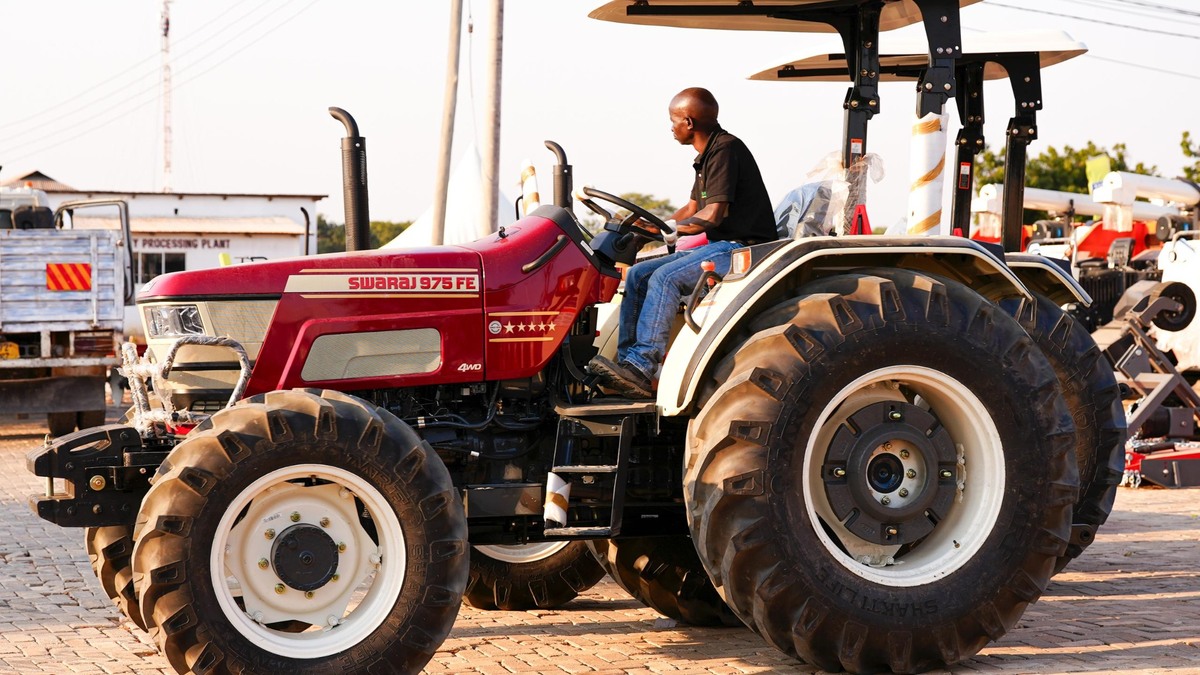
Types of medium farm equipment in Tanzania
Medium tractors
Medium tractors in Tanzania are the backbone of a medium-farm machinery system because they can power and pull various implements. Do not use one “medium tractor” horsepower range on its own to choose a machine; instead, use the implements, workload, hills, soil and farm operations. A tractor’s ability to fit different implements depends on features including PTO, hydraulic lift, 3-point linkage, transmission, traction and 2WD or 4WD.
If you are deciding between a walking tractor and a four-wheel tractor, use Agricom’s Power Tiller vs Tractor in Tanzania guide.
Ploughs and tillage machinery
Disc ploughs are farm implements in Tanzania used for primary tillage to cut and turn worked soil, while disc harrows break clods and help create a better seedbed. Farmers can also prepare soil with chisel ploughs and subsoilers, control weeds with cultivators, form planting ridges with ridgers, and loosen or mix soil with rotary tillers.
For primary tillage selection, see Agricom’s 3-disc plough guide.
Seeders and planting equipment
Farmers can place seeds at more uniform depths and spacing using maize planters, multi-crop planters, seed drills and precision planters. A crop planter should match the crop row spacing, seed type and planting method on the farm. It is also important to make sure the planter size, weight, linkage and power requirements fit the tractor.
Sprayers and fertiliser equipment
Boom sprayers are used to apply crop-protection products or liquid inputs over larger field areas; tractor-mounted sprayers can be a practical choice where the farm and tractor setup justify them. Fertiliser spreaders distribute fertiliser across the field according to the required application rate and crop needs. When purchasing, check tank or hopper capacity, working width, application rate, tractor compatibility and crop requirements.
Compare sprayer types in Agricom’s Boom Sprayers in Tanzania guide and review Fertilizer Spreaders in Tanzania for application equipment.
Farm trailers
Trailers are farm equipment used to haul harvested crops, fertiliser, seed, tools and other materials between fields, storage areas and other farm locations. Choose the trailer based on the load, tractor power, working environment and payload capacity. Farmers should also consider trailer size, braking, tyres, tipping system and how easy it is to load and unload.
Harvesting and post-harvest equipment
Reapers can assist crop harvesting, threshers separate grain from harvested plant material, and maize shellers remove kernels from cobs. Combine harvesters carry out several harvesting operations in one machine. The appropriate equipment depends on the crop, field size, harvesting system, output and whether the work is done on-farm or through a contractor.
For this stage of the farming cycle, read Agricom’s Harvesting, Threshing and Storage Equipment guide and Post-Harvest Machinery in Tanzania.
Irrigation equipment
Irrigation equipment in Tanzania moves and distributes water from wells, rivers, dams or storage tanks to crops. Pumps, sprinkler systems, drip irrigation and irrigation pipes are selected according to water availability, field size, crop type, required flow, elevation and the distance water must be moved.
For a specific pump example, see the Prakash PSPP-20 20 HP Pump guide.
Medium farm equipment by farming task
A practical way to choose farm equipment for medium farms is to start with the job that must be completed, then match the machine and implement to that task.
Land clearing: Tractor with a slasher or rotary cutter for grass, weeds and crop residues.
Primary tillage: Disc plough, chisel plough or subsoiler to break, loosen or turn soil.
Secondary tillage: Disc harrow, cultivator or rotary tiller to break soil clods and prepare the seedbed.
Ridge preparation: Ridger to form ridges where the crop and production system require them.
Planting: Maize planter, multi-crop planter or seed drill for more consistent seed placement.
Fertiliser application: Fertiliser spreader or applicator matched to the required rate and field coverage.
Crop spraying: Boom or tractor-mounted sprayer matched to crop, field area and tractor.
Weeding: Cultivator or inter-row weeder for mechanical weed control between crop rows.
Irrigation: Water pump, sprinkler system or drip irrigation matched to the water source and crop demand.
Farm transport: Farm trailer matched to tractor power, payload and loading/unloading needs.
Crop harvesting: Reaper or combine harvester depending on crop, scale and harvesting system.
Grain processing: Thresher or maize sheller to separate grain from harvested material.
Post-harvest handling: Grain cleaner, dryer or related equipment to prepare produce for storage.
How to choose medium farm equipment in Tanzania
Choosing the right agricultural machinery in Tanzania depends on farm size, operations, crop type and how the machines will work together. Before buying any farm machinery, start with the work you need the equipment to do.
• Keep your farm size and the area you must cover within the working window in mind so you do not buy equipment that is too small or unnecessarily large.
• Consider the crops or livestock system because different machines and implements suit different production methods.
• Check terrain, slopes, field access and soil conditions before choosing tractor traction, implement width or machine weight.
• Match the tractor to the implements. Confirm PTO requirements, hydraulic capacity, linkage, recommended tractor power and operating weight before purchase.
• Check spare-parts availability so maintenance does not depend on slow or expensive imports.
• Review after-sales support, servicing, training and warranty terms for the exact machine you are buying. Support conditions can differ by product.
• Compare the total operating cost, not only the purchase price. Fuel, maintenance, tyres, replacement parts, transport and labour all affect ownership cost.
Medium farm equipment prices in Tanzania
Farm machinery prices in Tanzania vary by equipment type, specification, brand, power, capacity and support level. Tractor horsepower, 2WD or 4WD, implement working width, tank or hopper capacity, payload, attachments and optional features can all change the final quote.
Freight, taxes, exchange rates, availability, delivery, assembly and after-sales support can also affect total purchase cost. For this reason, an evergreen guide should explain price factors rather than publish fixed figures that can quickly become outdated.
Looking for farm equipment for sale in Tanzania? Review the current Agricom product catalogue or contact Agricom for an equipment quotation based on your farm and required specifications.
Medium vs small and large farm equipment
Small farm equipment
Small farm equipment is generally suited to smaller plots, lighter workloads and lower-volume operations. It includes hand tools, power tillers, compact tractors, smaller planters, sprayers and lighter implements. The initial investment can be lower, but more manual work or additional passes may be needed as acreage and workload grow.
Medium farm equipment
Medium farm equipment balances work capacity, flexibility and operating cost. Utility tractors can handle multiple compatible implements for land preparation, planting, spraying and transport. This makes the category useful for farmers expanding mechanisation across several operations rather than buying a separate machine for every task.
Large farm equipment
Large farm equipment is designed for high field capacity, wider working widths and intensive commercial operations. Higher-capacity tractors, large implements and specialised harvest machinery can reduce time per hectare, but purchase, fuel, transport and maintenance costs are usually higher.
Why buy farm equipment from Agricom?
Agricom provides agricultural machinery, implements, spare-parts access, technical support and financing support for Tanzanian farmers. The company’s current website reports a network of agri-centres and dealers across the country and an online store for product discovery.
• Access to tractors, power tillers, combine harvesters and compatible farm implements across the farming cycle.
• After-sales support that includes technical service and maintenance programmes; confirm the exact terms for the machine you are buying.
• Spare-parts support and technical guidance intended to reduce downtime over the equipment lifecycle.
• Financing assistance through partner institutions, subject to the lender’s approval and current terms.
• An online store and contact team for product information, quotations and current availability.
Explore the Agricom online store, review after-sales and financing services, or contact Agricom for tailored machinery guidance.
FAQs about medium farm equipment in Tanzania
What is medium farm equipment?
Medium farm equipment is a practical category for machinery and implements with more working capacity than light small-farm equipment but less emphasis on the highest-capacity machinery used for intensive large-scale operations. It is not one universal horsepower class.
What equipment is needed for a medium-sized farm?
It depends on the crop and operations, but common needs include a tractor or power unit, plough or harrow, planter, sprayer, fertiliser equipment, trailer, irrigation system and suitable harvesting or post-harvest machinery.
What tractor horsepower is best for a medium farm?
There is no single correct horsepower. Choose the tractor from the heaviest or most demanding implements and workloads you need to handle, then confirm PTO, hydraulics, linkage, traction and manufacturer compatibility.
How much does medium farm equipment cost in Tanzania?
Prices vary by machine type, brand, horsepower, capacity, configuration, imported components, delivery and support. Request a current quote for the exact tractor or implement rather than relying on a fixed evergreen price.
Should I buy a tractor before choosing implements?
Plan the tractor and implements together. The implement determines important requirements such as power, PTO, hydraulics, linkage and weight, so choosing them as a system reduces compatibility problems.
Where can I buy medium farm equipment in Tanzania?
Agricom sells agricultural machinery and implements through its product network and online store. Use the current product catalogue or contact the team for availability, specifications and a quotation.
Conclusion
Medium farm equipment in Tanzania helps growing farms mechanise land preparation, planting, crop care, transport, irrigation, harvesting and post-harvest work without treating every operation as a large-commercial machinery problem. The right choice depends on the farm, crop, field conditions, workload and how the tractor and implements work together.
Before buying, compare the specifications, compatibility, spare-parts access and after-sales support for the equipment you need. Contact Agricom to discuss your farm, crops, machinery requirements and budget, or browse the current Agricom equipment catalogue.