
Seed Drills in Tanzania: Types, Uses and How to Choose | Agricom
Yaani Media
Learn what a seed drill is, the main types available in Tanzania, key benefits, maintenance tips, and how to choose the right model for your farm.
Seed Drills in Tanzania: Types, Uses and How to Choose | Agricom
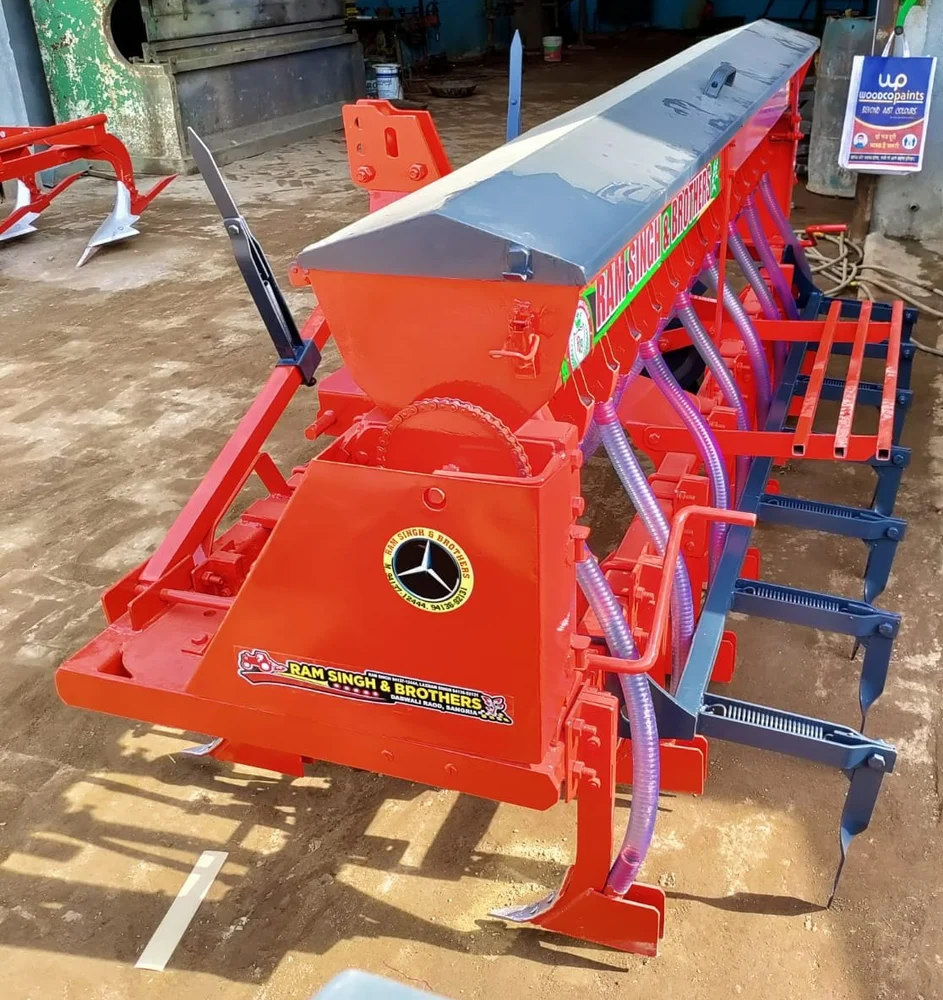
A seed drill is an agricultural tool used to sow crop seeds into the soil uniformly. It helps by saving time, ensuring uniform spacing, reducing labor, preventing seed waste, and improving germination rates. Before seed drills were developed, farmers sowed seeds manually, which was inaccurate and wasted seeds.
In Tanzania, a seed drill is becoming an important tool in modern farming. Farmers are increasingly using it to improve productivity and save time during planting. In this article, we’ll explore what a seed drill is, its types, uses, benefits to farmers, how it’s maintained, and why farmers choose to buy from Agricom.
Visit Agricom today to explore our seeder models and buy the one that suits your soil conditions and farm size.
What is a seed drill?
A seed drill machine is an agricultural device that helps sow crop seed at the right depth, at the right spacing, in straight rows, and cover them evenly. This helps protect seeds from predators and drying from direct sunlight, and also helps plants get enough sunlight and nutrients from the soil. The tool is used for sowing various crops, including wheat, barley, millets, oats, and legumes.
Key features of seed drills
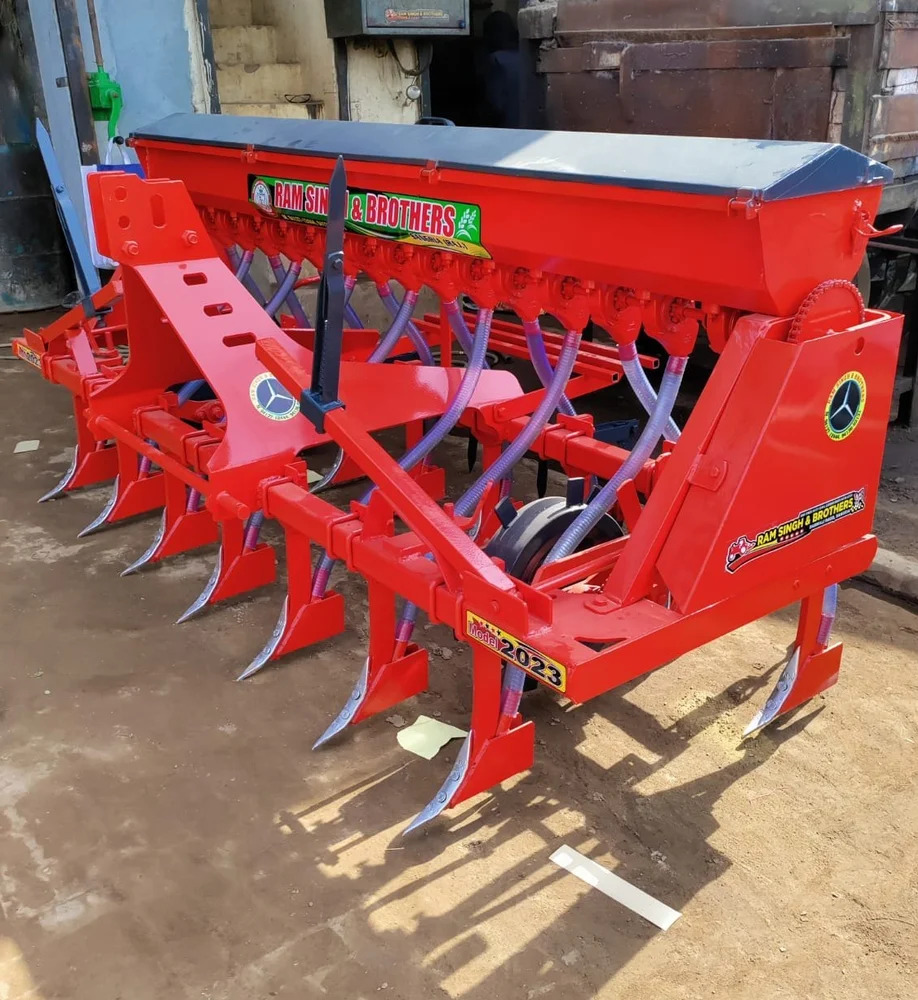
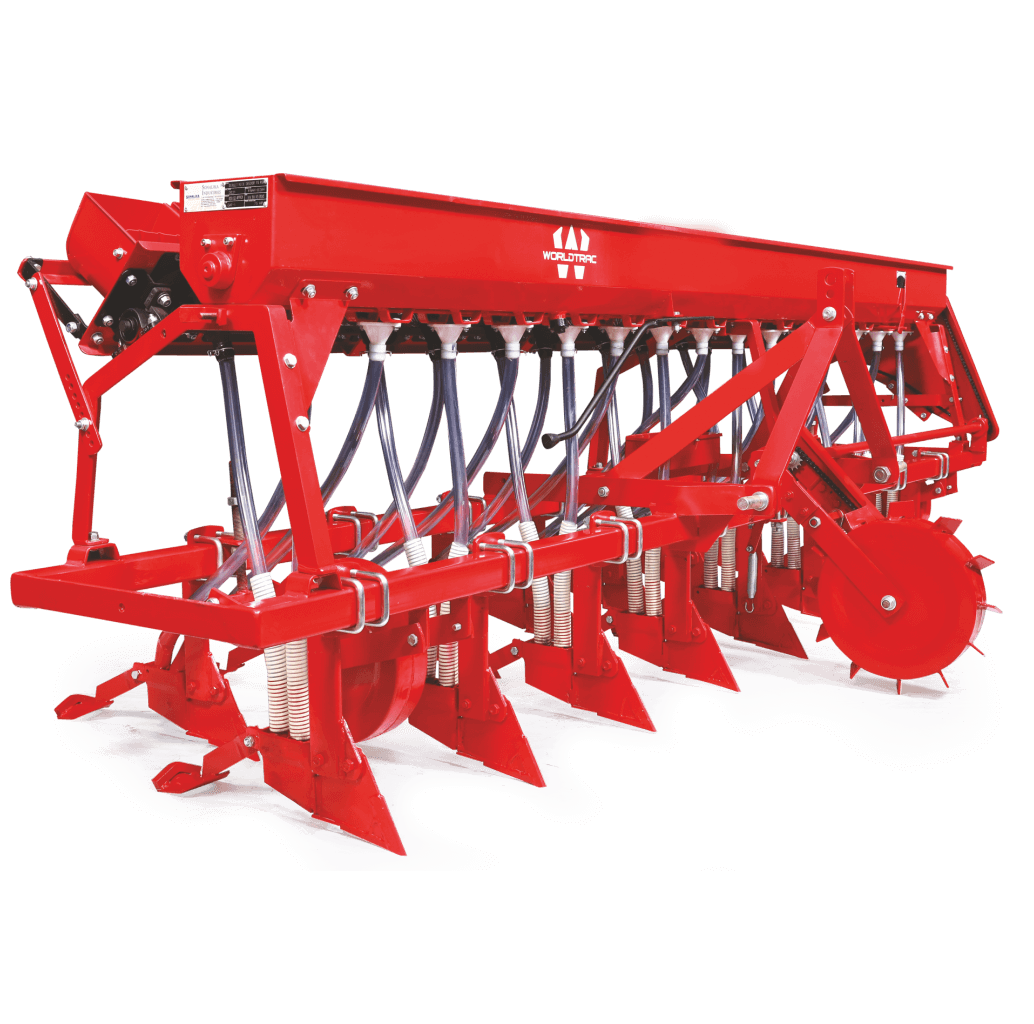
A mechanical seed drill consists of several parts, each playing a specific role. These parts include:
Frame
The frame of the drill is usually made of strong, high-quality angle iron with a well-suited protective cover. This enables it to withstand all operational stress and workload during farm use.Seed box
This is made of mild steel sheet or galvanized iron with a suitable cover. In some models, a small agitator is fitted to prevent the seed from forming a blockage.Seed metering mechanism
The seed metering mechanism is the core component of a seed drill. It controls how many seeds are released from the hopper and how evenly they are spaced in the soil. This is achieved through either mechanical methods, such as fluted rollers or rotating plates, or pneumatic systems that use air pressure to deliver seeds with precision.Furrow opener
These parts are used for digging furrows in the soil where seeds are placed. They include full or curved runner type, shoe type, hoe type, single-disc type, and many others.Covering tool
It is a device for covering the furrow after the seed has been planted. This is usually done by bars, packers, chains, press wheels, or rollers, all made in different shapes and sizes.Transport wheel
The wheels are mounted with the required components to transmit power to the seed-dropping mechanism.
ALSO READ: Seeding and planting equipment in Tanzania| Agricom
Types of seed drills available
There are many types of agricultural seed drills to choose from. This depends on your farm space, budget and needs. Here are different types:
Manual seed drills
Manual seed drills are hand-controlled. They are mainly used in small-scale farming and gardening, and are easy to handle and maintain.
Tractor-mounted seed drills
A tractor-mounted seed drill is fitted onto a tractor and can sow a large area in a short time. They are commonly used in medium- and large-scale farming and are ideal for planting maize,, wheat, and oats.
Conventional seed drills
A conventional seed drill is a farming machine designed to plant seeds in rows on prepared soil. These types are commonly used in sowing sorghum, peanuts, sunflowers, and cereals.
No-till seed drills
No-till seed drills, or zero-till, are used to plant seeds directly without land preparation. Commonly used after harvesting rice, where crop leftovers remain on the farm. This helps maintain soil nutrients and saves labour and fuel costs.
Seed cum fertilizer drills
A seed cum fertilizer drill is used for planting seeds and applying fertilizer at the same time. It has two boxes, one for fertilizer and the other for seeds. It helps by balancing nutrients evenly, saves time and fuel, and promotes early and healthy crop growth.
How to choose the right seed drill
Choosing the right farm seed planting machine plays a big role in plant growth, increasing production, and minimizing labour time and costs. Here is what a farmer should consider when choosing a seed planting machine:
Type of crop seed: Always use a small seeder for small seeds; the others are suitable for big seeds.
Soil conditions: Farmers should make sure they choose a suitable seeder for their soil type and farm conditions.
Tractor capability: Farmers should choose a seeder that can easily combine with their tractor or other agricultural machines.
Quality of the seeder: Seeders are built to withstand harsh working conditions. Therefore, operators should invest in types made from strong, durable materials for long-term performance.
Analyse your farming needs: You should check the type of crop you want to grow, the farm size, and whether your farm is easy to access. By knowing these, you will be able to make a good decision on which seeder to select.
ALSO READ: Boom sprayers in Tanzania
Benefits of using seed drills in modern farming
Below are the benefits of using seed drills in modern farming:
1: Higher crop yields: The device plants the seed directly into the soil, which reduces the risk of the seed being blown away by the wind, eaten by predators or burnt by the sun. This enhances crop yields.
2: Reduced seed waste: They minimize seed wastage by making sure seeds are evenly planted and placed in the right depth for efficient growth.
3: Saves time and labour costs: Planting manually can take longer, but seeders can plant a big area within a short period of time. It also reduces the need for many workers, helping cut operational costs and save money.
Better crop uniformity: The device evenly distributes seed across the farm. This helps plants avoid competing for water, sunlight, and nutrients, resulting in stronger, healthier crops with higher yields.
Accurate seed placement and uniform depth: The seed drill ensures seeds are sown at a uniform depth in the soil. This helps with fast germination and even crop growth.
Maintenance tips for long-lasting performance
Proper maintenance of farm planting machines ensures they last longer and enhances performance. Here are the maintenance tips:
Cleaning after use
After every use, you should deep-clean your machine with clean water to remove dirt, soil, and any plant or seed debris. Examine these parts, clutters, seed boxes and tubes for any damage or blockage. These ensure that your machine is ready for the next planting, and if there is any damage, you can fix it before next use.
Routine servicing
You should regularly service all parts to ensure there are no worn parts and lubricate moving parts. This act ensures the equipment remains in good working order.
Monitoring tire pressure
Many seeders have tires that help them move smoothly on the farm. It is important to ensure the tires are at the pressure the manufacturer recommends. This helps machines move easily and sow seeds evenly.
Checking the seed metering system
Make sure you inspect the seed metering system to make sure it’s working properly. This helps to maintain accurate seed distribution and avoid uneven planting.
Setting the right planting depth
The depth at which seeds are planted will determine how your plant will grow. Always check and adjust the seeder machine's depth regularly based on crop type and soil conditions. Make sure the coulters and openers are in good condition and well set to ensure even seed planting and better germination.
Proper storage
Before storage, wash the machine thoroughly, lubricate any moving parts, and apply a rust inhibitor to vulnerable parts. Store it in a dry, sheltered area to protect it from weather damage.
Why buy seed drills from Agricom?
At Agricom, we sell high-quality, durable sowing implements. Our seed drills are made from strong, durable materials for all farm sizes and soil types. Below are reasons why farmers choose to buy a seed drill in Tanzania from us:
Quality assurance: Our machines are made of high-quality, strong and durable materials that can withstand any soil conditions.
Reliable after-sales support: Our experts provide after-sales services to support your agricultural seed drill from the time of purchase to lifetime maintenance.
Spare parts availability: We offer a wide range of spare parts under one roof, saving you the hassle of searching for them.
Competitive pricing: We sell our sedders at a pocket-friendly price, which is affordable to both big and small farmers.
We sell seed drill implements that are compatible with different tractors, which are also available in our shop.
Shop for strong, durable and high-quality seed drill machines on our online store.
FAQs about seed drills
What are the different types of seed drills?
The different types of seed drills are precision drills, mechanical box drills and pneumatic air drills.
What are the main parts of a seed drill?
The main parts of a seed drill are the seed box, frame, furrow opener, seed metering mechanism, covering device, transport wheels, drive transmission system and clutch.
What is the main purpose of a seed drill?
The main purpose of a seed drill is to place seeds into the soil at even depth and spacing, then cover them with soil.
What is a seed drill called?
A seed drill, also known as a seeding or sowing machine, is used to sow seeds.
Conclusion
A seed drill is an essential machine every farmer in Tanzania should have. It helps reduce seed wastage, ensures uniform spacing of seeds when planting, sows seeds on large farms quickly with less labour, and evenly applies fertilizer. Stop by our shop today and walk home with a machine that will make your planting process easier.
Contact us today to learn more about our seed drill prices in Tanzania.
Phone: +25569 999 7998
Email: info@agricom.co.tz
Location: Plot 2319, Nyerere Road, Kamata, Opposite Mikumi Mall, Dar es Salaam, Tanzania