
Farm landscaping basics in Tanzania: levelling, drainage, and field layout for higher yields
Yaani Media
Explore simple farm landscaping techniques that improve soil health, prevent waterlogging, support better crop growth, and increase long-term productivity.
Farm Landscaping Basics in Tanzania: Levelling, Drainage, and Field Layout for Higher Yields
Farm landscaping is one of the key activities done when planting crops in Tanzania. It influences the flow of water over the field, crop layout, and land utilization efficiency. When done correctly, it improves soil health and boosts the overall farm productivity. Agricom offers solutions for everything you, as a farmer, need for farm mechanization.
Seasonal rainfall is critical for farmers in Tanzania who rely on it for their livelihoods, making good land preparation even more crucial for healthy crops. If land is not prepared properly, water may accumulate, soils may wash away, and the crop may not grow evenly, affecting the quality of the harvest. Farm landscaping is a solution to these problems that involves shaping and organizing the land prior to planting. This includes hands-on tasks such as farm planning and field layout design, as well as drainage and levelling planning to make the best use of the land.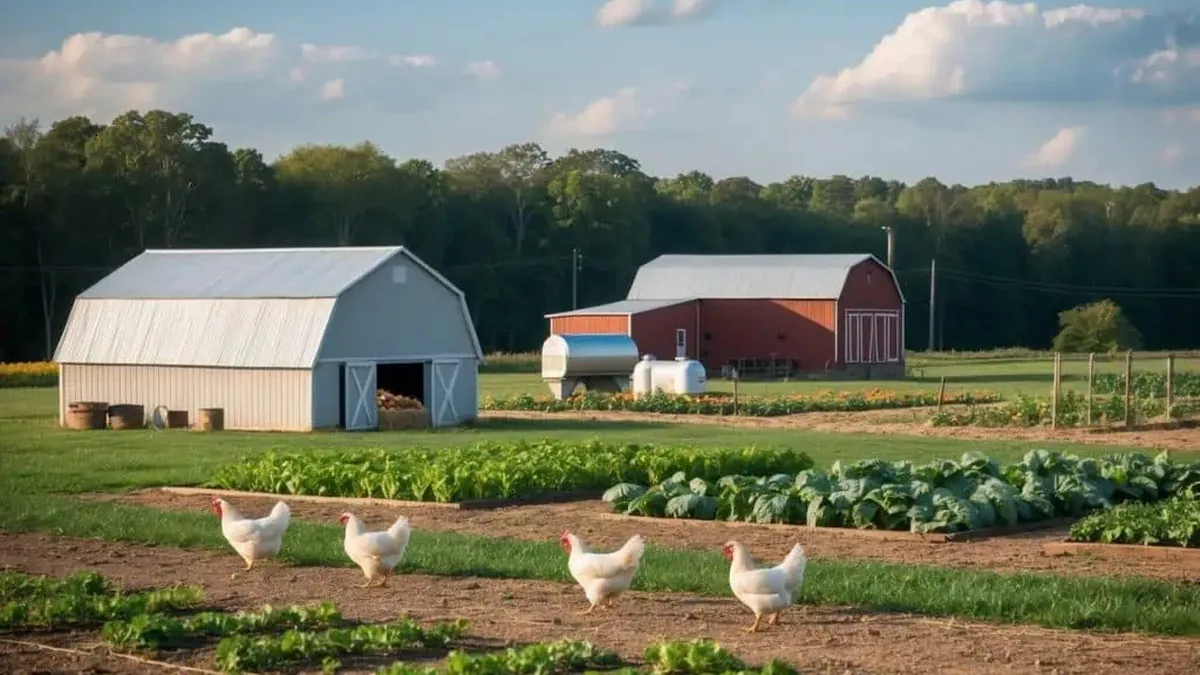
Also Read: Crop protection equipment in Tanzania | Agricom
What is farm landscaping?
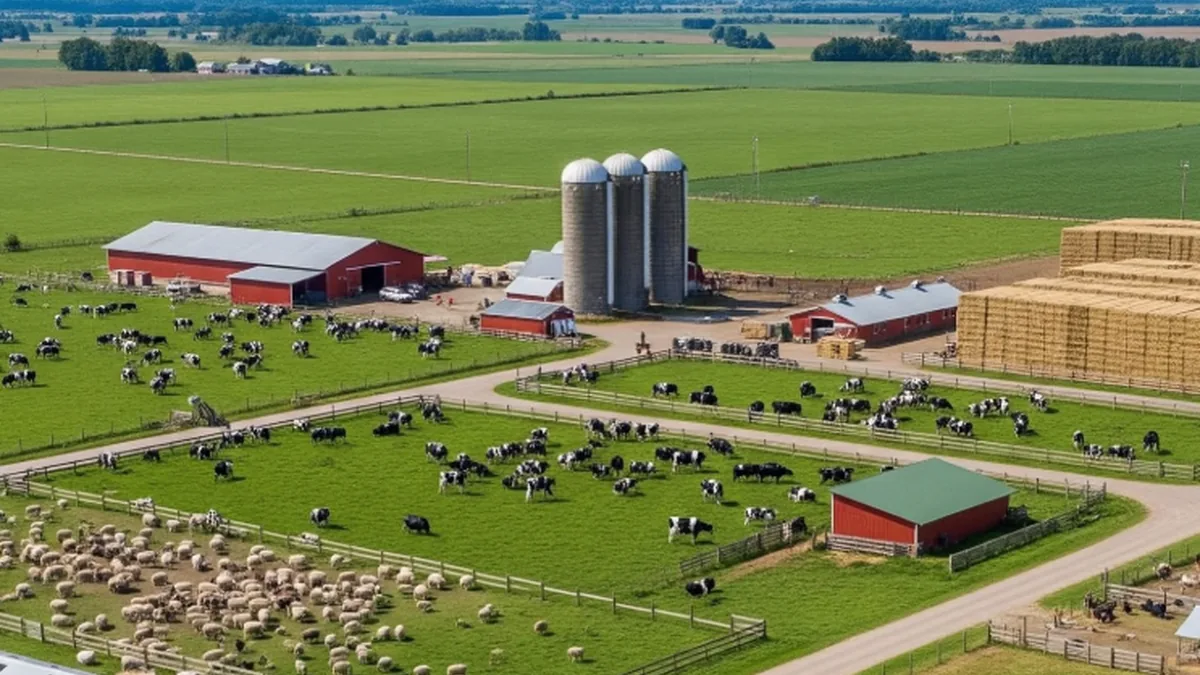
Farm landscaping is the tactical design of agricultural land to mix food production with natural ecosystems, environmental sustainability, and aesthetics. Farm landscaping goes beyond traditional farming by organizing property zones, crops, livestock, water, and living spaces into a functional, beautiful, and highly efficient layout.
Farm levelling basics for better crop production
Why levelling matters
Farm levelling is the process of providing a level ground for water to distribute evenly over the field. If the land is not flat, water would pool in the low point and dry out in the high point. This imbalance affects seed germination and crop growth.
Levelling matters as it will result in efficient irrigation and less water wastage. It also enables crops to grow in unison, making harvests easier and more uniform. Most Tanzanian farmers rely on rainfall, and water stagnation may harm their crops; thus, the benefits of levelling are significant.
Different ways of contributing to a farm leveling
There are different ways farmers can level their land depending on the farm size and available resources. They include:
Manual levelling
This is done using hand tools like hoes and rakes. Manual leveling is mainly suitable for small farm leveling. On medium-sized farms, animal-drawn equipment can also be used to move soil over uneven terrain.
Mechanical levelling
This is done on larger farms with tractors and grading equipment. This method is more accurate and provides a uniform surface, making it perfect for commercial farming.
In modern agriculture, laser-guided levelling is also gaining popularity due to its high accuracy and enhancement of water distribution.
Practical insight for Tanzania
Many farmers in rural areas begin with simple levelling methods and then move on to mechanical systems. The important thing is to be sure there is no surplus or insufficiency of water in any area of the field. Levelling improvements, even at a small scale, can significantly improve your crops’ performance and reduce input waste.
Field drainage systems for farms that promote soil health
Why drainage is important
Drainage is the removal of water from the agricultural field to avoid waterlogging. Poor drainage reduces soil oxygen levels, compromising root development and affecting crop health. It may also cause erosion and nutrient loss.
By providing good drainage, soil structure is improved, and plant growth is healthy. It maintains appropriate soil moisture and crop air content. Drainage systems are of great value in Tanzania, where heavy rainfall in some areas results in productive farmland.
Types of drainage systems
Based on soil type and land structure, several types of agricultural drainage systems are used.
Surface drainage refers to the construction of shallow channels to remove excess water from the field. It is an easy and effective technique in regions with abundant rainfall.
Subsurface drainage involves adding underground pipes or channels to remove water from deeper soil layers. This is a more sophisticated system, and is typically employed in commercial farms.
Ridge and furrow drainage, which involves the cultivation of crops on ridges and draining water through the furrows. This system is effective for crops that are sensitive to excess water.
Simple drainage solutions
Simple techniques, such as constructing small trenches on slopes to divert water from crops, can also be employed on farms. Planting grass strips around fields helps slow down water flow and reduces soil erosion. These simple methods are low-cost and can be introduced on most small farms in Tanzania.
Field layout planning for maximum efficiency
The importance of the layout of the fields.
Field layout planning is the division and organisation of a farm for planting out crops. An effective layout enhances farm management, minimizes labour expenses and optimizes land use. It also helps prevent the crops from getting too much sunlight, water, and space for growth. Without proper planning, farms can become disorganized, making it difficult to manage irrigation, planting, and harvesting activities. A well-designed layout supports efficient farm operations and improves productivity.
Common layout systems
The rectangular system- This is one of the most common systems used. Here, fields are partitioned into rows and blocks. This system is simple to operate, and it can be used for most crops.
The contour farming layout is done based on the land's shape. It is used on sloping fields for erosion control and water retention.
Mixed cropping layout - In this system, different crops are sown in an organized pattern to ensure optimal land use and soil fertility.
Best practice approach
In Tanzania, farmers are encouraged to select a layout based on their soil type, water availability, and crop type. Careful consideration must be given to adequate space for machinery access, irrigation ditches, and movement. This planning stage will minimize future problems and maximize long-term productivity.
Explore our services today and discover how Agricom supports farmers with complete agricultural solutions.
The step-by-step farm landscaping process:
Step 1: Site assessment
The first step is to carefully observe the land. This involves soil type, slope, water flow patterns, and the existing vegetation. Knowledge of the land is an aid to planning decisions.
Step 2: Land clearing
The removal of all unwanted plants, stones and debris from the field. This will provide a clean surface for continued preparation.
Step 3: Levelling
The soil then takes a form that is reshaped to make a uniform surface. This is to ensure uniform water distribution and better planting conditions.
Step 4: Drainage setup
Drainage channels or systems are designed to manipulate water flow. This helps prevent waterlogging and safeguard crops during prolonged rainfall.
Step 5: Field layout marking
Lastly, the land is sectioned according to the desired layout. This makes it easier to plan planting operations and to manage the farm.
Why Proper farm landscaping increases yields
Crop yields are enhanced by proper farm landscaping, which creates optimal growing conditions. With good water management, the roots grow stronger, and the plants' growth patterns are healthier. Soil nutrients are also maintained, which contributes to long-term fertility.
It also minimises crop losses due to flooding or drought stress within the same field. Farmers can plant more efficiently and harvest higher-quality produce. This results in higher income and better food security over time.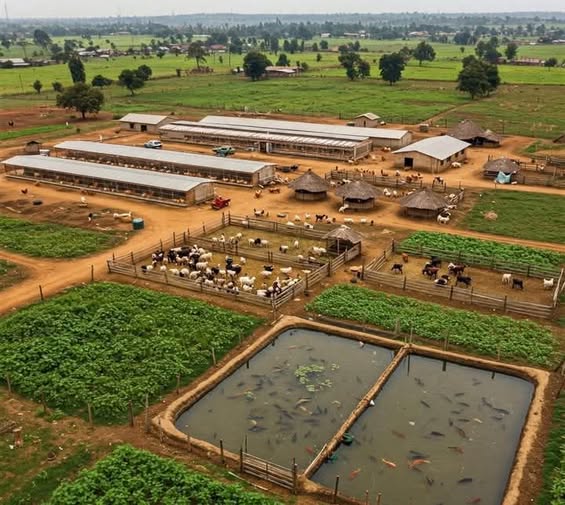
Common farm landscaping mistakes to avoid
One of the biggest mistakes many farmers make is avoiding land preparation work because of time or cost. This avoidance often results in reduced crop productivity later in the season. Another common mistake is ignoring natural water flow patterns, leading to flooding or erosion.
Further, some farmers do not properly divide the field, which can make irrigation and harvesting more challenging. Avoiding these mistakes ensures better resource use and improved productivity.
Modern tools used in farm landscaping
The accuracy and efficiency of land preparation are enhanced with modern farming tools, which you can shop for at Agricom. Large fields are quickly graded using tractors fitted with grading equipment. High precision water management is available with laser levelling tools.
Soil testing tools are another way to assess soil condition before landscaping begins. The tools enable farmers to make better decisions regarding the overall farm design and productivity.
Expert tips for better farm design in Tanzania
Farmers should always shape their fields in accordance with natural land features whenever possible. Additionally, water sources and rainfall conditions need to be considered when designing layouts.
Good drainage maintenance will help reduce long-term farmland damage. Farmers are also encouraged to start small and progressively improve their farm design as resources allow.
Also Read: Seeding and planting equipment in Tanzania| Agricom
FAQs about farm landscaping basics
What is farm landscaping?
Farm landscaping is the process of preparing and shaping farmland to improve water flow, soil condition, and crop arrangement for better productivity.
What is the reason behind farm levelling?
Farm levelling allows water to be distributed evenly across the field, promoting good crop growth and minimising water loss.
What is the best drainage system for small farms?
Simple surface drainage systems, such as shallow trenches, are often the most effective for small farms in Tanzania.
How does field layout affect crop yield?
Field layout affects how efficiently land is used, how crops access resources, and how easily farm activities are managed.
Conclusion
Farm landscaping plays a vital role in improving soil health, farm productivity, and water management in Tanzania. Proper levelling, drainage systems, and field layout planning help farmers create better growing conditions and reduce common farming challenges. Even simple landscaping improvements can lead to healthier crops and higher yields over time. Farmers should carefully assess their land and apply practical farm landscaping techniques to support long-term agricultural success.
Contact us to learn more about how you can improve your farm productivity.