
Tractor Plough in Tanzania: Types, Uses, Prices & Buying Guide
Yaani Media
Compare tractor plough types in Tanzania, their uses, specifications and prices. Explore Agricom’s available implements and enquire about the right plough.
Tractor Plough in Tanzania: Types, Uses, Prices & Buying Guide
A tractor plough is farm equipment primarily used to loosen or till soil before sowing seeds. The tool buries weeds & crop residue, improving aeration and drainage and prepares a seedbed. In Tanzania, Agricom ensures farmers can access a range of tractor plough types, including mouldboard, reversible, chisel, and disc ploughs from trusted brands such as Kubota, Swaraj, and Fieldking.
Choosing to buy your tractor plough in Tanzania from Agricom not only gives you a wide range of farm equipment, but also ensures you get quality tools at an affordable price. Our tractor ploughs for sale help farmers revolutionize their farms by making soil preparation more efficient. Explore the definition, types, the process of selecting the right plough, specifications for comparison, their prices, and why Agricom is the farmer’s best equipment supplier in Tanzania.
Buy your tractor plough from the comfort of your home from our online store, and enjoy the reliability that comes with shopping remotely.
What is a tractor plough?
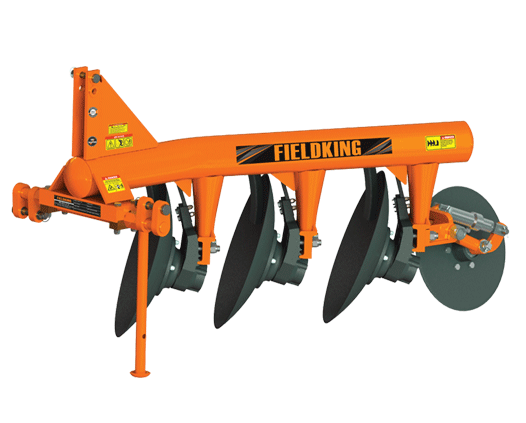
A tractor plough is a farm implement primarily used for tillage. The tool is mounted on a tractor to cut, loosen, and turn over the soil to improve drainage before planting. Unlike the older ploughs pulled by bulls and horses, these ploughs are pulled by tractor horsepower and are more efficient in tilling land faster and deeper. Most tractor-mounted ploughs use a three-point linkage or drawbar and are commonly used in medium- and large-scale farming.
Types of tractor ploughs used in agriculture
The table below lists the various tractor ploughs in Tanzania, their uses, and the conditions under which each is suitable.
Plough type | Main function | Best soil & field conditions | Typical working depth |
[Mouldboard Plough](https://agricom.co.tz/shop/products/fieldking-3-furrow-mounted-mouldboard-plough-27) | Primary tillage, soil inversion and burial of weeds and crop residues. | Heavy clay, loamy soils, grassy fields and land requiring thorough weed and crop residue burial. | 6–8 inches (15–20 cm) |
Disc Plough | Cutting, loosening and turning soil in difficult field conditions. | Hard, dry, sticky, stony or root-filled soils. | 6–10 inches (15–25 cm) |
Reversible Plough | Turning soil in one direction on every pass to minimise ridges and dead furrows. | Irrigated fields, sloping land and fields requiring a more level surface. | 6–10 inches (15–25 cm) |
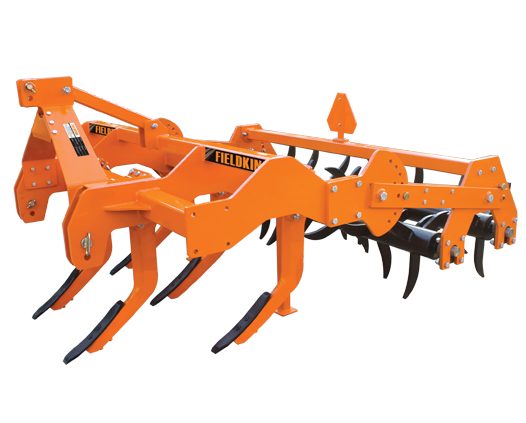
Chisel Plough | Breaking compacted soil and improving aeration without fully inverting the topsoil. | Dryland farming, conservation tillage and fields with moderate soil compaction. | 8–12 inches (20–30 cm) |
Subsoiler (Ripper) | Breaking deep compacted soil layers and hardpan to improve root penetration and drainage. | Fields with deep compaction, poor drainage or hardpan caused by repeated cultivation and heavy machinery. | 12–20+ inches (30–50+ cm) |
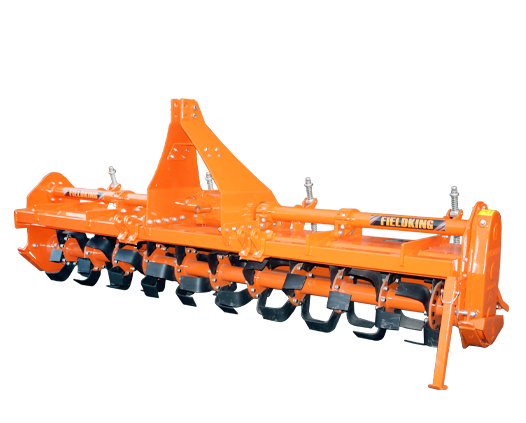
Rotary Plough (Rotavator) | Pulverising and mixing topsoil to prepare a fine, uniform seedbed. | Vegetable plots, paddy fields and land requiring fine seedbed preparation. | 2–6 inches (5–15 cm) |
What is a tractor plough used for?
Being an efficient farm tillage tool, the tractor plough ensures proper land preparation and provides a vital foundation for crop production. Its major functions are:
· The tool is used to break and loosen compacted farm soil, allowing roots to develop more easily.
· Since it can bury weeds and unwanted vegetation beneath the soil surface, it helps reduce or eliminate weeds before crops are planted.
· It improves soil aeration because one of its roles is to loosen the soil, creating additional spaces between soil particles and allowing better movement of air and water through the root zone.
· Helps bury unwanted crop residue and organic materials beneath the soil, which, after decomposing, contributes to the soil’s organic matter.
· Helps with seedbed preparation, where ploughing serves as a secondary tillage operation, creating conditions conducive to seed placement and germination.
· Specialized implements such as chisel ploughs and subsoilers can be used to break compacted layers.
How to choose the right tractor plough
To choose the right tractor ploughing equipment, you need to match plough type, size, horsepower and required tillage depth. Proper matching helps prevent wheel slip, lower fuel use, and avoid overloading your tractor. Here are the key tips to choosing the plough for Tanzanian farmers:
· Consider soil type, which may range from loam to rocky or compacted soil.
· Ensure the tractor horsepower is compatible with the plough you choose to prevent oversized implements, which can increase fuel consumption and place additional strain on the tractor.
· Identify the different working depths for various crop and farming operations.
· Consider the availability and cost of replacement parts such as shared discs, bolts, and other wear components.
· Consider field shapes; for instance, small or irregularly shaped fields may require a plough that can turn easily and operate efficiently around field boundaries.
Read also: Best Tractors for Small Farms in Tanzania: Models, HP and Buying Guide
Tractor plough specifications to compare before buying
Before buying a tractor plough, vital factors include your tractor horsepower and hitch category. The table below provides various tractor plough specifications for comparison before buying.
Specification | What to check |
Plough Type | Choose a disc plough for hard, rocky, dry or sticky soils. Choose a mouldboard plough for softer soils that need deep turning. |
Plough Design | Choose a reversible plough to turn soil in both directions. A conventional plough turns soil in one direction. |
Required Tractor Horsepower (HP) | Check the recommended tractor power. A general guide is 15–25 HP per furrow or disc, depending on soil conditions. |
Three-Point Hitch Category | Match the plough to your tractor's hitch. Category 1 suits tractors below 45 HP, Category 2 suits 45–100 HP, and Category 3 suits tractors above 100 HP. |
Hydraulic Requirements | Check the number of hydraulic outlets needed to lift or turn the plough. |
Number of Furrows / Discs | Check whether the plough has 2, 3 or 4 furrows or discs. More furrows cover more land but need more tractor power. |
Working Width | Check the cutting width of each furrow or disc. Common sizes are 12, 14 and 16 inches. |
Maximum Working Depth | Check how deep the plough can work. Most ploughs operate at depths of 20–30 cm (8–12 inches). |
Under-Frame Clearance | Check the space between the ground and main frame. A clearance of 60–75 cm helps prevent clogging from crop residues and tall weeds. |
Disc Diameter and Thickness | For disc ploughs, check for a diameter of 24–28 inches and a thickness of 6–8 mm. Boron steel discs offer good wear resistance. |
Main Frame Construction | Choose a strong tubular or box-section steel frame. It can handle tough field conditions better. |
Safety / Trip Mechanism | Check for shear bolts or auto-reset springs. They protect the plough when it hits stones or tree stumps. |
Furrow Wheel (Rear Tail Wheel) | Check for an adjustable furrow wheel. It helps keep the tractor straight during ploughing. |
Local Spare Parts Availability | Check whether discs, shares, points, landslides and bearings are available from local dealers. |
Read also: Agricultural Mechanization in Tanzania
Tractor plough price in Tanzania
Tractor plough prices in Tanzania depend on the type, size, number of discs/furrows, brand, and build quality. Other factors, such as tractor compatibility, delivery, and after-sales support may also influence the final cost. When purchasing, inquire whether the price includes spares, accessories, and/or installation. Visit our shops for a quote and details on the available plough models. Get a tractor plough that offers the best durability, working capacity, and lowest maintenance costs to get the most value for your farm.
Tractor disc plough vs disc harrow: what is the difference?
A tractor disc plough is commonly used for primary tillage to deep-cut, turn, and break hard virgin soil, whereas a disc harrow is used for secondary tillage to break up clods, level the field, and prepare a smooth seedbed after ploughing. The snapshot below shows the differences between a tractor plough and disc harrow.
Comparison factor | Tractor plough | Disc harrow |
Main Function | Opens new land and turns the soil during primary tillage. | Breaks soil clods and prepares a smooth seedbed. |
Tillage Stage | Used during the first stage of land preparation. | Used after ploughing to refine the soil before planting. |
Working Depth | Works deeper, typically 15–30 cm (6–12 inches). | Works shallower, typically 5–15 cm (2–6 inches). |
Soil Action | Cuts, lifts and turns the soil to bury weeds and crop residues. | Breaks soil clods, levels the surface and mixes crop residues into the topsoil. |
Disc Design | Uses fewer, larger and more deeply curved discs. | Uses multiple smaller discs arranged in gangs. |
Power Requirements | Requires higher tractor power due to deeper soil penetration. | Generally requires less pulling power, depending on its size and soil conditions. |
Fuel Consumption | Usually consumes more fuel per acre because it works deeper. | Generally uses less fuel per acre when working on previously ploughed land. |
Best Application | Breaking new land, turning compacted soil and burying heavy weeds. | Breaking clods, levelling fields and preparing seedbeds. |
Working Speed | Usually operates at a slower speed due to higher soil resistance. | Generally works at a faster speed on previously prepared land. |
Best Time to Use | Before secondary tillage and final seedbed preparation. | After ploughing and before planting. |
Read also: Power tiller attachments and implements: Types, uses & buying guide
Why choose Agricom for tractor ploughs?
Choose Agricom for reliable agricultural tractor ploughs suited to different farming needs and soil conditions in Tanzania. We help farmers compare plough types, sizes and tractor compatibility to find the right equipment for their fields. Our team also provides product information, technical guidance and after-sales support. Contact us today to check available models, prices, spare parts and support options before making your purchase.
FAQs about tractor ploughs
What is a tractor plough used for?
A tractor plough is a tractor-mounted farm implement used for tillage before planting crops.
Which type of tractor plough is best for hard soil?
Since it has rotating blades, the disc plough is the best tractor plough for hard, dry and rocky soil.
What horsepower tractor is needed for a plough?
Commonly, farming ploughs require a 40 to 80 HP tractor, though a light plough can work with a 30 HP tractor and a heavy multi-furrow needs 90 to 150+ HP.
What is the difference between a disc plough and a mouldboard plough?
A disc plough uses rotating concave steel blades to roll over hard, rocky, or root-filled soil, while a mouldboard plough uses a curved fixed blade to slice and completely flip cleaner, softer soil upside down.
Conclusion
Getting the right tractor plough for your farms in Tanzania means matching equipment to the soil type, budget, and workload. Compare ownership costs and maintenance requirements, and assess compatibility, traction, and tractor horsepower before making your final decision. Contact us today on +255 699 997 998 or email info@agricom.co.tz to discuss your farm requirements and request a current quotation.